Transfer pricing and tax deductions upheld on established principles, while employee contributions and warranty provisions returned for fresh examinat...
Captive transfer pricing relies on industrial consumer tariffs, while genuine quotations can benchmark effluent treatment transfers under the Other Me...
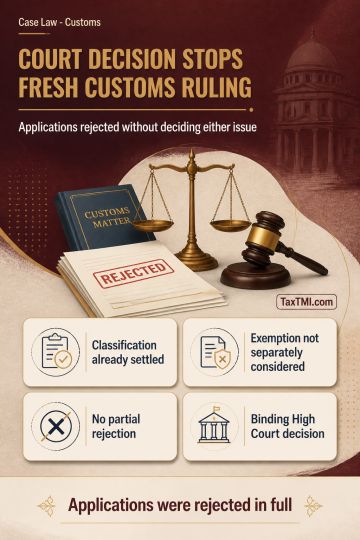
Specific tariff classification for ophthalmic instruments and extended limitation principles determine the treatment of duty demands, confiscation, an...
Integrated golf function determines classification, placing launch monitors and simulators under other golf equipment rather than measuring instrument...
Public servant status under anti-corruption law extends to recognised stock exchange leadership; constitutional and sanction challenges do not succeed...
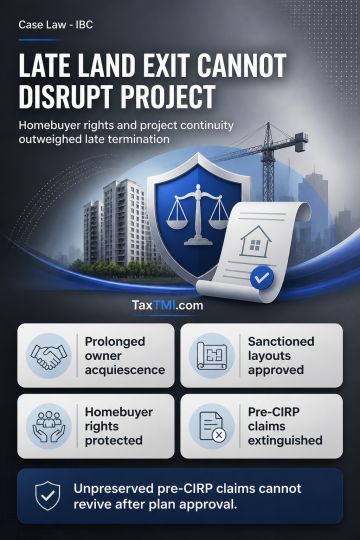
Acquiescence, homebuyer protection and clean-slate resolution principles prevent landowners from disrupting an integrated project through late termina...
Forfeiture of the earnest money deposit by the appellant bank - The Supreme Court held that, the underlying principle envisaged u/s(s) 73 & 74 of the Indian Contract Act, 1872 which is a general law will have no application, when it comes to the SARFAESI Act more particularly the forfeiture of earnest-money deposit which has been statutorily provided under Rule 9(5) of the SARFAESI Rules as a consequence of the auction purchaser’s failure to deposit the balance amount. - The High Court erred in law by holding that forfeiture of the entire deposit under Rule 9 sub-rule (5) of the SARFAESI Rules by the appellant bank after having already recovered its dues from the subsequent sale amounts to unjust enrichment.
Forfeiture of the earnest money deposit by the appellant bank - The Supreme Court held that, the underlying principle envisaged u/s(s) 73 & 74 of the Indian Contract Act, 1872 which is a general law will have no application, when it comes to the SARFAESI Act more particularly the forfeiture of earnest-money deposit which has been statutorily provided under Rule 9(5) of the SARFAESI Rules as a consequence of the auction purchaser’s failure to deposit the balance amount. - The High Court erred in law by holding that forfeiture of the entire deposit under Rule 9 sub-rule (5) of the SARFAESI Rules by the appellant bank after having already recovered its dues from the subsequent sale amounts to unjust enrichment.
Note: It is a system-generated summary and is for quick reference only.
 TaxTMI
  TaxTMI
 of 4811

















 Join Channel


