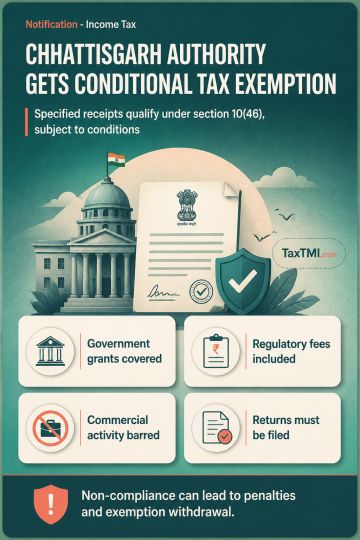
Specified regulatory authority income receives conditional tax exemption, subject to non-commercial activity, unchanged income character, and return f...
Tax exemption for regulatory authority income applies retrospectively, subject to non-commercial activity, unchanged income sources, and return-filing...
Input tax credit conditions remain constitutionally valid, with eligible recipient claims considered under GST circulars and retrospective filing dead...
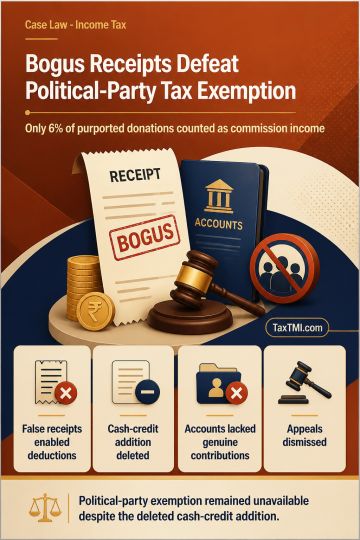
Bogus donation receipts justified commission income assessment and defeated political-party tax exemption for inaccurate accounts and reporting failur...
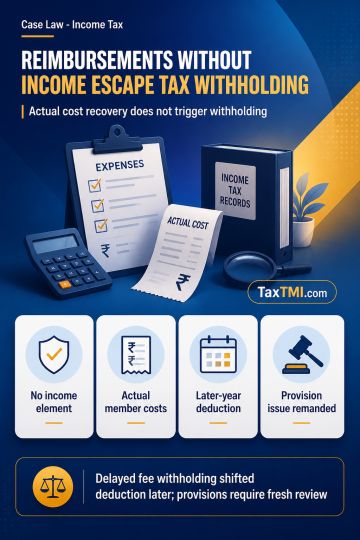
Pure reimbursement without income element escapes tax withholding, while delayed withholding and unsupported provisions face deferred or renewed scrut...
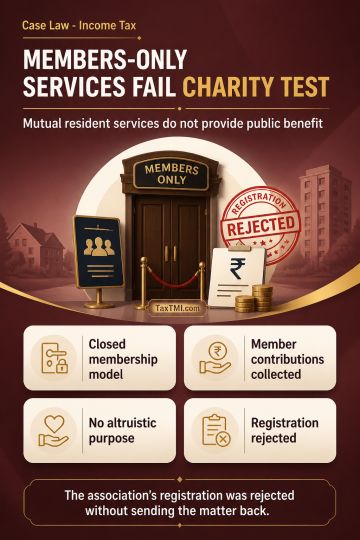
Public benefit requirement defeats charitable registration where residents' association services are reciprocal, member-only facilities governed by mu...
Forfeiture of the earnest money deposit by the appellant bank - The Supreme Court held that, the underlying principle envisaged u/s(s) 73 & 74 of the Indian Contract Act, 1872 which is a general law will have no application, when it comes to the SARFAESI Act more particularly the forfeiture of earnest-money deposit which has been statutorily provided under Rule 9(5) of the SARFAESI Rules as a consequence of the auction purchaser’s failure to deposit the balance amount. - The High Court erred in law by holding that forfeiture of the entire deposit under Rule 9 sub-rule (5) of the SARFAESI Rules by the appellant bank after having already recovered its dues from the subsequent sale amounts to unjust enrichment.
Forfeiture of the earnest money deposit by the appellant bank - The Supreme Court held that, the underlying principle envisaged u/s(s) 73 & 74 of the Indian Contract Act, 1872 which is a general law will have no application, when it comes to the SARFAESI Act more particularly the forfeiture of earnest-money deposit which has been statutorily provided under Rule 9(5) of the SARFAESI Rules as a consequence of the auction purchaser’s failure to deposit the balance amount. - The High Court erred in law by holding that forfeiture of the entire deposit under Rule 9 sub-rule (5) of the SARFAESI Rules by the appellant bank after having already recovered its dues from the subsequent sale amounts to unjust enrichment.
Note: It is a system-generated summary and is for quick reference only.
 TaxTMI
 of 4805






 Join Channel


 TaxTMI