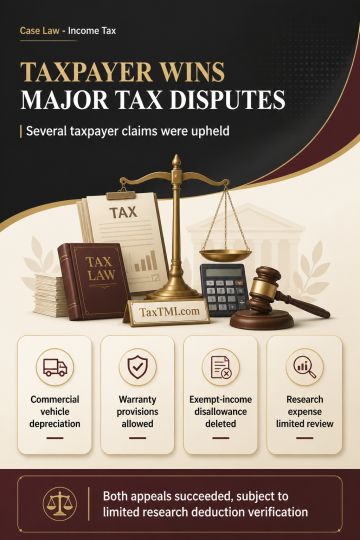
Commercial vehicle depreciation, scientifically determined warranty provisions and exempt-income disallowances were resolved in favour of the taxpayer...
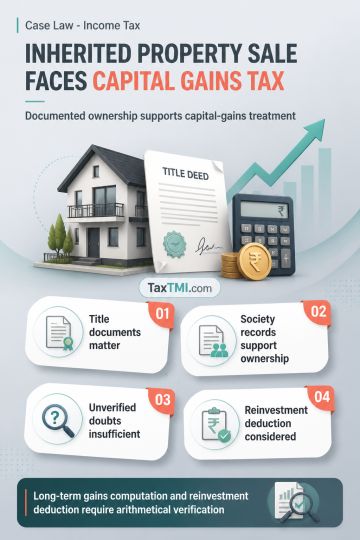
Inherited property sale proceeds require capital-gains treatment where ownership is supported by evidence, not suspicion or unverified signature doubt...
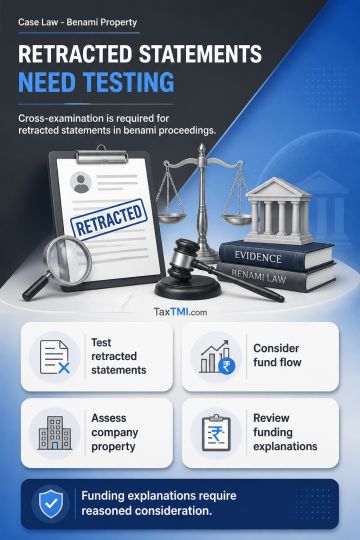
Cross-examination of retracted statements is essential where foundational evidence supports a benami allegation and documented funding explanations re...
Capital-goods exemption covers plant-modernisation accessories, while the import restriction applies only to earlier capital-goods components and spar...
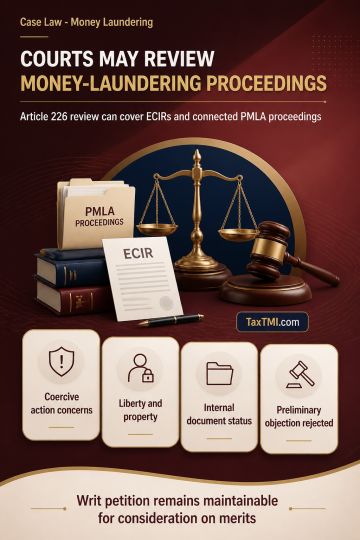
Constitutional judicial review permits challenges to ECIRs and connected money-laundering proceedings where coercive action affects fundamental intere...
Validity of detention order - The petitioner argued that being a buyer from a GST-registered supplier, they had no means or obligation to verify the supplier's compliance with GST regulations. - The High court noted that the supplier company had cleared its tax dues on 30.12.2023, before the issuance of the show cause notice, which diminished the claim of intent to evade tax. Furthermore, the court observed that if there were any deficiencies in the supplier’s documentation, the registration should not have been granted. Therefore, once the supplier was registered and had paid the tax, allegations against them didn't hold. - Considering these points, the high court held that the petitioner, being unrelated to the supplier's alleged discrepancies, should not be penalized.
Validity of detention order - The petitioner argued that being a buyer from a GST-registered supplier, they had no means or obligation to verify the supplier's compliance with GST regulations. - The High court noted that the supplier company had cleared its tax dues on 30.12.2023, before the issuance of the show cause notice, which diminished the claim of intent to evade tax. Furthermore, the court observed that if there were any deficiencies in the supplier’s documentation, the registration should not have been granted. Therefore, once the supplier was registered and had paid the tax, allegations against them didn't hold. - Considering these points, the high court held that the petitioner, being unrelated to the supplier's alleged discrepancies, should not be penalized.
Note: It is a system-generated summary and is for quick reference only.
 TaxTMI
  TaxTMI
 of 4823






 Join Channel


