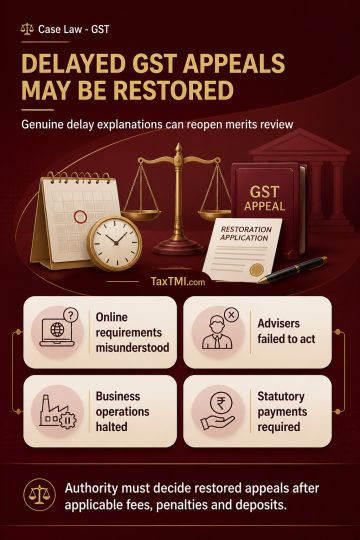
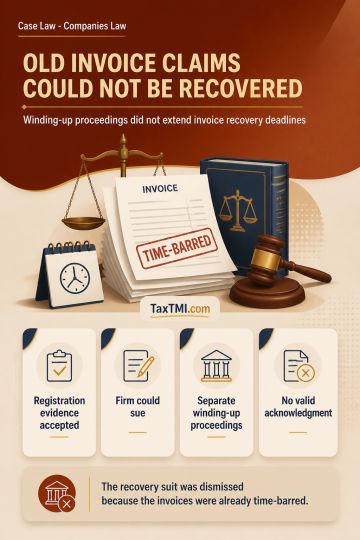
Invoice-based recovery claims remain time-barred despite separate winding-up proceedings, absent valid acknowledgment or part-payment of the disputed ...
Extended limitation fails without specific suppression allegations, while overseas employee secondment remains taxable as manpower supply within norma...
Time-share accommodation classification excludes Club or Association Service where purchasers receive contractual occupancy rights without genuine mem...
CENVAT credit for trading requires reversal, while taxable-service rental credit remains proportionately available and limitation issues await resolut...
Vicarious liability for dishonoured company cheques may extend to non-signatory directors where complaints contain foundational responsibility avermen...
Validity of detention order - The petitioner argued that being a buyer from a GST-registered supplier, they had no means or obligation to verify the supplier's compliance with GST regulations. - The High court noted that the supplier company had cleared its tax dues on 30.12.2023, before the issuance of the show cause notice, which diminished the claim of intent to evade tax. Furthermore, the court observed that if there were any deficiencies in the supplier’s documentation, the registration should not have been granted. Therefore, once the supplier was registered and had paid the tax, allegations against them didn't hold. - Considering these points, the high court held that the petitioner, being unrelated to the supplier's alleged discrepancies, should not be penalized.
Validity of detention order - The petitioner argued that being a buyer from a GST-registered supplier, they had no means or obligation to verify the supplier's compliance with GST regulations. - The High court noted that the supplier company had cleared its tax dues on 30.12.2023, before the issuance of the show cause notice, which diminished the claim of intent to evade tax. Furthermore, the court observed that if there were any deficiencies in the supplier’s documentation, the registration should not have been granted. Therefore, once the supplier was registered and had paid the tax, allegations against them didn't hold. - Considering these points, the high court held that the petitioner, being unrelated to the supplier's alleged discrepancies, should not be penalized.
Note: It is a system-generated summary and is for quick reference only.
 TaxTMI
  TaxTMI
 of 4821











 Join Channel