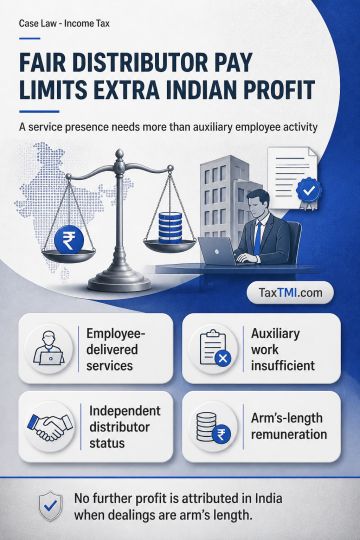
Service permanent establishment requires non-auxiliary services, while arm's-length distributor remuneration precludes further profit attribution in I...
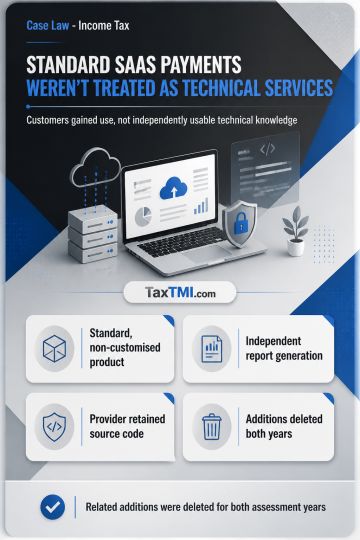
Make-available condition excludes standard SaaS subscription receipts where customers receive no independently usable technical knowledge after subscr...
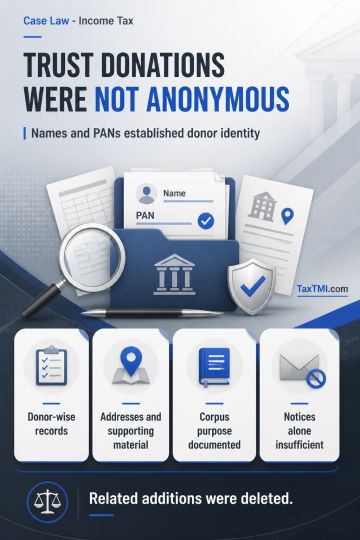
Anonymous donation classification fails where charitable trusts maintain undisputed donor identity records and evidence corpus contributions' intended...
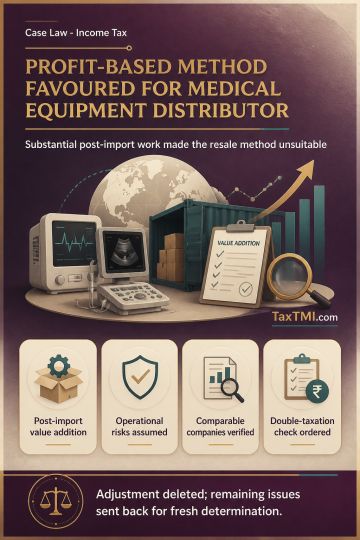
Transfer pricing method selection favours TNMM where medical-equipment distribution involves substantial post-import value addition and operational ri...
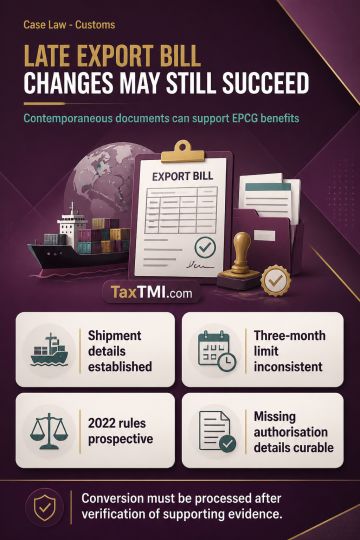
Post-export shipping bill conversion remains available where contemporaneous evidence supports EPCG benefits despite curable procedural omissions and ...
Validity of detention order - The petitioner argued that being a buyer from a GST-registered supplier, they had no means or obligation to verify the supplier's compliance with GST regulations. - The High court noted that the supplier company had cleared its tax dues on 30.12.2023, before the issuance of the show cause notice, which diminished the claim of intent to evade tax. Furthermore, the court observed that if there were any deficiencies in the supplier’s documentation, the registration should not have been granted. Therefore, once the supplier was registered and had paid the tax, allegations against them didn't hold. - Considering these points, the high court held that the petitioner, being unrelated to the supplier's alleged discrepancies, should not be penalized.
Validity of detention order - The petitioner argued that being a buyer from a GST-registered supplier, they had no means or obligation to verify the supplier's compliance with GST regulations. - The High court noted that the supplier company had cleared its tax dues on 30.12.2023, before the issuance of the show cause notice, which diminished the claim of intent to evade tax. Furthermore, the court observed that if there were any deficiencies in the supplier’s documentation, the registration should not have been granted. Therefore, once the supplier was registered and had paid the tax, allegations against them didn't hold. - Considering these points, the high court held that the petitioner, being unrelated to the supplier's alleged discrepancies, should not be penalized.
Note: It is a system-generated summary and is for quick reference only.
 TaxTMI
  TaxTMI
 of 4819






 Join Channel