Necessary-party requirements limit impleadment of independent entities, while deferred consideration does not create an appealable adverse determinati...
Food supplement classification requires common parlance and authoritative tests, preventing treatment as proprietary Ayurvedic medicines without suppo...
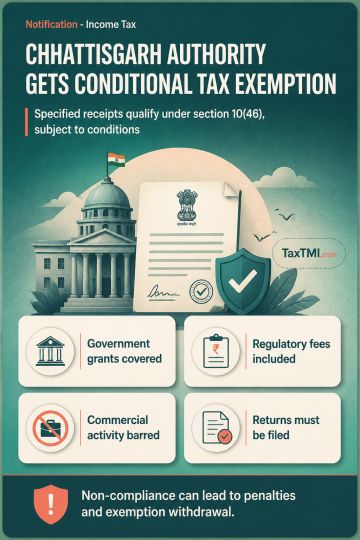
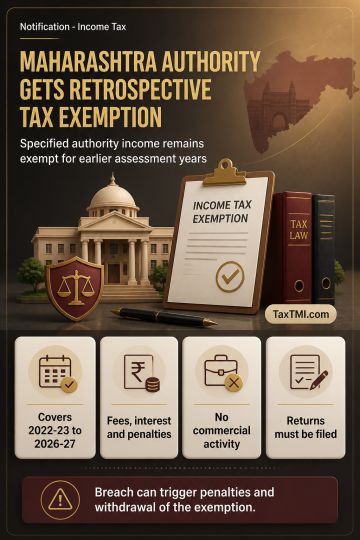
Specified regulatory authority income receives conditional tax exemption, subject to non-commercial activity, unchanged income character, and return f...
Tax exemption for regulatory authority income applies retrospectively, subject to non-commercial activity, unchanged income sources, and return-filing...
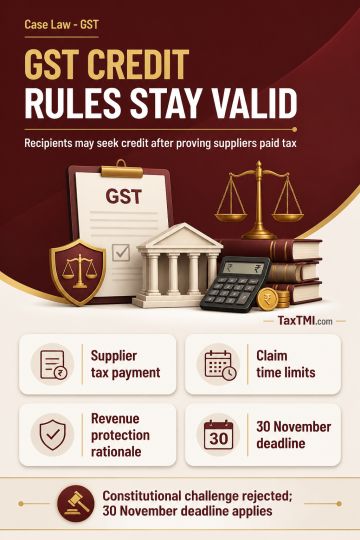
Input tax credit conditions remain constitutionally valid, with eligible recipient claims considered under GST circulars and retrospective filing dead...
Page of 4790
Press 'Enter' after typing page number.
481 to 500 of 95794 Results
❮
❯
❯❯
0 / 200
Expand Note
Add to Folder
No Folders have been created
+
Are you sure you want to delete "My most important" ?
Profiteering - Constitutional validity of Section 171 CGST Act and state GST Acts - The High Court views Section 171 as falling within the Parliament's law-making power under Article 246A, which empowers both the Parliament and state legislatures to enact laws on GST. This includes all ancillary, incidental, and necessary matters related to GST legislation. The Court also finds that Section 171 does not delegate any essential legislative function, as it sets out clear legislative policy and guidelines. - Moreover, the High Court points out that any ambiguity in the functioning of the National Anti-Profiteering Authority (NAA) established u/s 171, which may lead to inconsistent decisions, would not invalidate the section or the rules framed under it.
Profiteering - Constitutional validity of Section 171 CGST Act and state GST Acts - The High Court views Section 171 as falling within the Parliament's law-making power under Article 246A, which empowers both the Parliament and state legislatures to enact laws on GST. This includes all ancillary, incidental, and necessary matters related to GST legislation. The Court also finds that Section 171 does not delegate any essential legislative function, as it sets out clear legislative policy and guidelines. - Moreover, the High Court points out that any ambiguity in the functioning of the National Anti-Profiteering Authority (NAA) established u/s 171, which may lead to inconsistent decisions, would not invalidate the section or the rules framed under it.
Note: It is a system-generated summary and is for quick reference only.
 TaxTMI
 of 4790















 Join Channel


 TaxTMI