Specified regulatory authority income receives conditional tax exemption, subject to non-commercial activity, unchanged income character, and return f...
Tax exemption for regulatory authority income applies retrospectively, subject to non-commercial activity, unchanged income sources, and return-filing...
Input tax credit conditions remain constitutionally valid, with eligible recipient claims considered under GST circulars and retrospective filing dead...
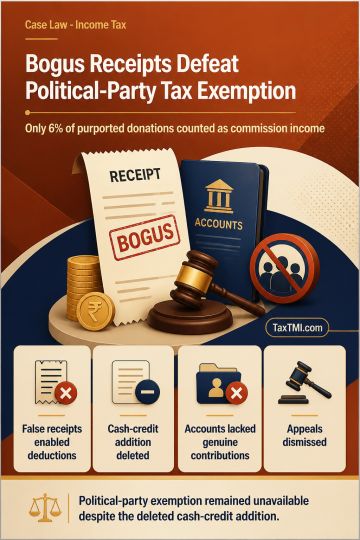
Bogus donation receipts justified commission income assessment and defeated political-party tax exemption for inaccurate accounts and reporting failur...
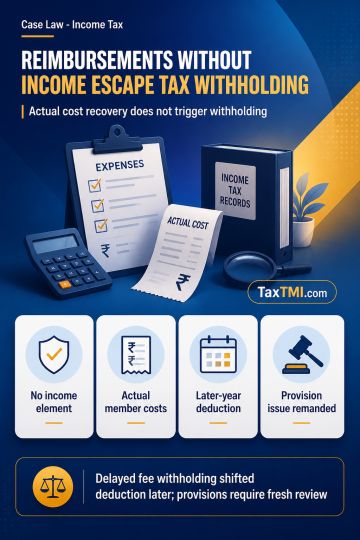
Pure reimbursement without income element escapes tax withholding, while delayed withholding and unsupported provisions face deferred or renewed scrut...
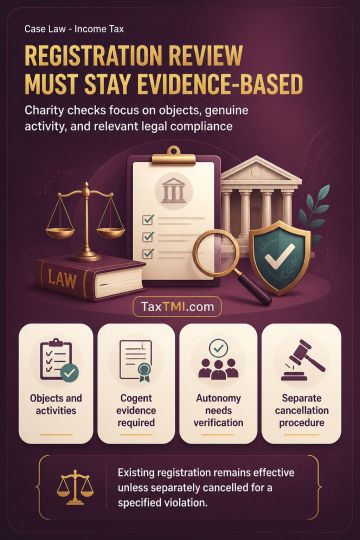
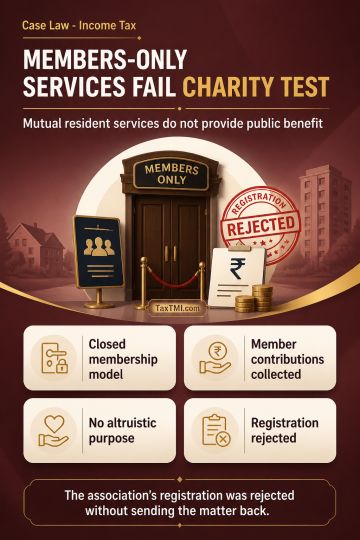
Public benefit requirement defeats charitable registration where residents' association services are reciprocal, member-only facilities governed by mu...
SUBKA VISHWAS” [Legacy Dispute Resolution] Scheme Rules, 2019 - petitioner was unable to make payment due to technical glitch - The judgment reiterates the principle that a scheme must be followed strictly according to its terms and conditions. In this case, the "SUBKA VISHWAS" Scheme, being a complete code in itself, required adherence to specific time limits for filing and payment, which the petitioner failed to meet. The court emphasized that extending the time limit for compliance with the scheme’s provisions is beyond its jurisdiction under Article 226 of the Constitution of India. - HC
SUBKA VISHWAS” [Legacy Dispute Resolution] Scheme Rules, 2019 - petitioner was unable to make payment due to technical glitch - The judgment reiterates the principle that a scheme must be followed strictly according to its terms and conditions. In this case, the "SUBKA VISHWAS" Scheme, being a complete code in itself, required adherence to specific time limits for filing and payment, which the petitioner failed to meet. The court emphasized that extending the time limit for compliance with the scheme’s provisions is beyond its jurisdiction under Article 226 of the Constitution of India. - HC
Note: It is a system-generated summary and is for quick reference only.
 TaxTMI
 of 4805










 Join Channel


 TaxTMI