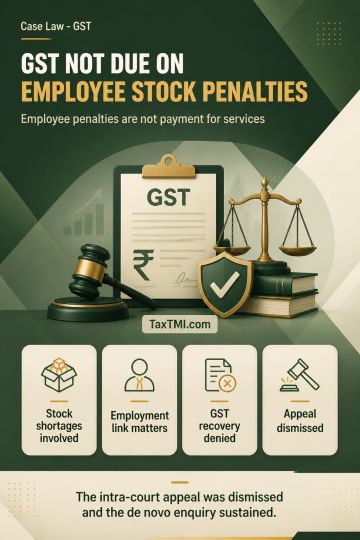
Employee stock-shortage penalties do not constitute consideration for services, preventing GST collection under Schedule II in employment relationship...
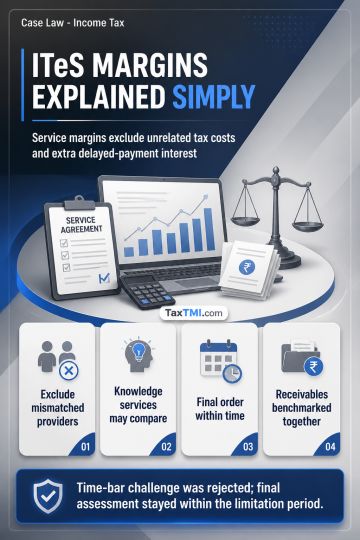
Transfer-pricing treatment of ITeS margins excludes pass-through tax recoveries and separate delayed-receivables interest after working-capital adjust...
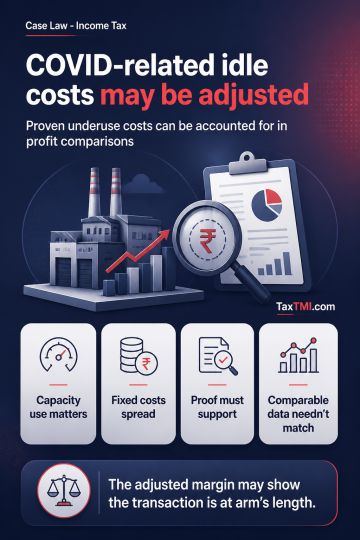
Capacity-utilisation adjustments under TNMM can neutralise substantiated COVID-related idle costs where underutilisation materially affects profitabil...
Page of 4830
Press 'Enter' after typing page number.
181 to 200 of 96587 Results
❮
❯
❯❯
0 / 200
Expand Note
Add to Folder
No Folders have been created
+
Are you sure you want to delete "My most important" ?
A Company cannot refuse `Transmission of Shares’, once the `legal heirs’ proves his/her entitlement to them, through a `Probate’, a `Succession Certificate’. It is to be pointed out that `transfer’ is an act of parties or law by which the title to the party is conveyed from one person to another. This would lapse by `Operation of Law’ or `Succession’. `Transmission of Shares’ on the basis of `will’ can raise complicated issues which require an `evidence’, to be read by the parties and need to be determined by a Court of Law. - AT
A Company cannot refuse `Transmission of Shares’, once the `legal heirs’ proves his/her entitlement to them, through a `Probate’, a `Succession Certificate’. It is to be pointed out that `transfer’ is an act of parties or law by which the title to the party is conveyed from one person to another. This would lapse by `Operation of Law’ or `Succession’. `Transmission of Shares’ on the basis of `will’ can raise complicated issues which require an `evidence’, to be read by the parties and need to be determined by a Court of Law. - AT
Note: It is a system-generated summary and is for quick reference only.
 TaxTMI
  TaxTMI
 of 4830



 Join Channel


