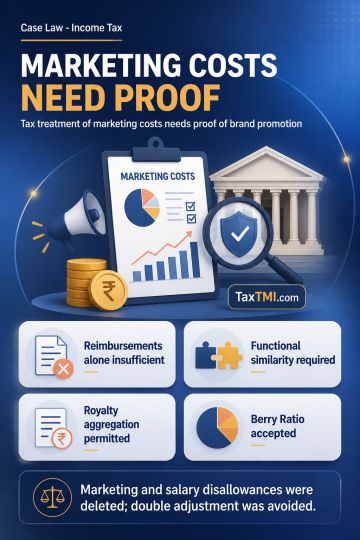
Transfer pricing requires evidence for AMP transactions, functionally reliable comparables, and appropriate aggregation or Berry Ratio benchmarking me...
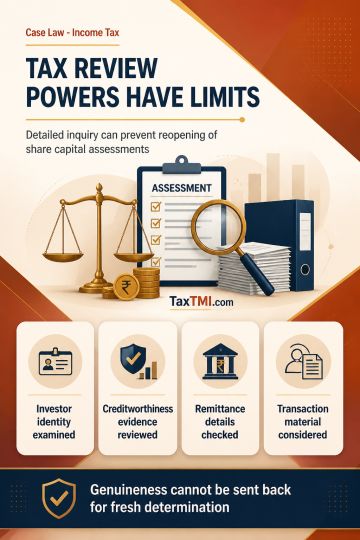
Revisionary jurisdiction cannot reopen share capital assessments where adequate inquiry supports a permissible view and no independent error is establ...
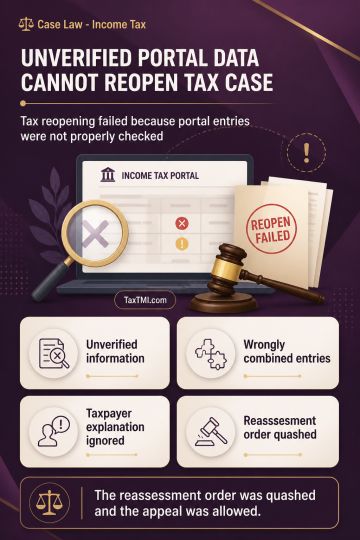
Reassessment jurisdiction fails where unverified portal information is aggregated without examining the taxpayer's explanation or relevance of entries...
Statutory sanction for delayed reassessment requires approval from the prescribed authority; approval by an inferior authority invalidates jurisdictio...
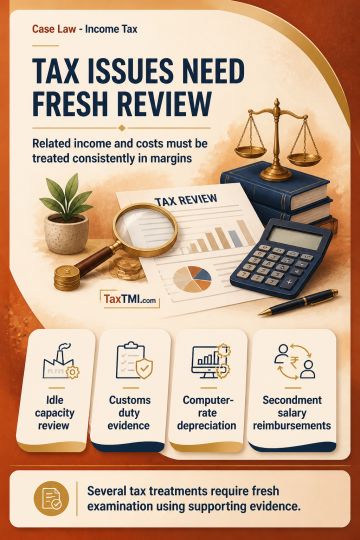
Transfer pricing margin adjustments require matching treatment of non-operating income and related costs, with comparability issues reconsidered on ev...
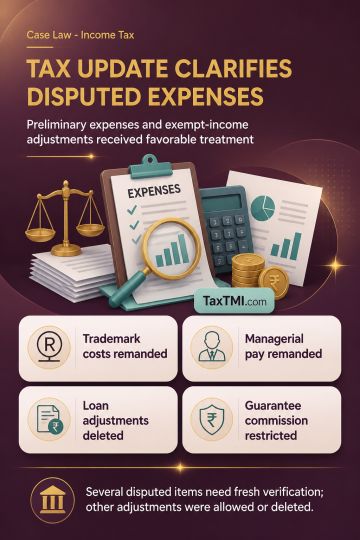
Preliminary-expense amortisation and MAT exempt-income adjustments prevailed, while trademark costs and managerial remuneration require fresh verifica...
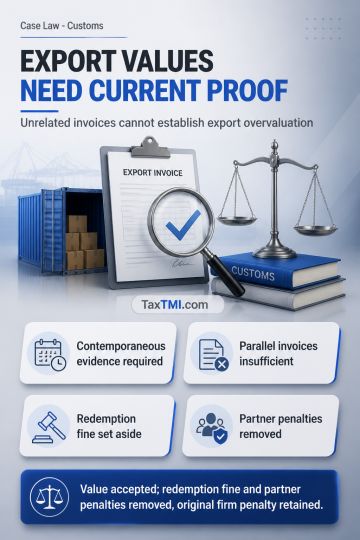
Export valuation requires contemporaneous evidence; unrelated invoices cannot prove overvaluation, and dual penalties on firm and partner are impermis...
Classification of imported goods - If every ‘flange’ available in the market could be used in any industry, then perhaps the classification under a single CTH would have served that purpose, but since one size does not fit all, different classifications are provided. The classification thus depends on, inter alia, functionality as well. Hence, when an item is imported for a specific purpose, if the Revenue does not believe in the classification declared by such importer, then the same could be rejected on some palpable evidence and if required, the Revenue could always insist upon further details / explanation insofar as the function / end-use claimed by such importer is concerned, in order to ascertain the chief/primary function, to arrive at the proper classification, otherwise the purpose of having two Customs Tariff Headings loses its significance, which is not the intention of legislature. - AT
Classification of imported goods - If every ‘flange’ available in the market could be used in any industry, then perhaps the classification under a single CTH would have served that purpose, but since one size does not fit all, different classifications are provided. The classification thus depends on, inter alia, functionality as well. Hence, when an item is imported for a specific purpose, if the Revenue does not believe in the classification declared by such importer, then the same could be rejected on some palpable evidence and if required, the Revenue could always insist upon further details / explanation insofar as the function / end-use claimed by such importer is concerned, in order to ascertain the chief/primary function, to arrive at the proper classification, otherwise the purpose of having two Customs Tariff Headings loses its significance, which is not the intention of legislature. - AT
Note: It is a system-generated summary and is for quick reference only.
 TaxTMI
 of 4801













 Join Channel


 TaxTMI
