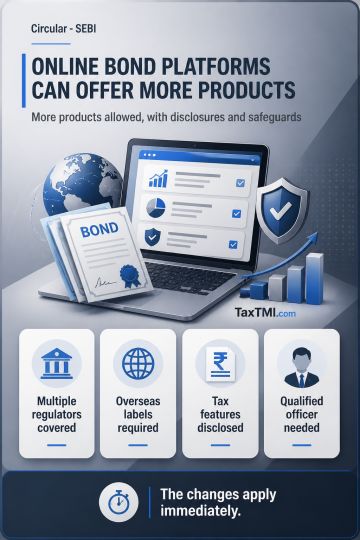
Online bond platforms may offer overseas-regulated products and tax-specific bonds subject to disclosures, compliance safeguards and revised complianc...
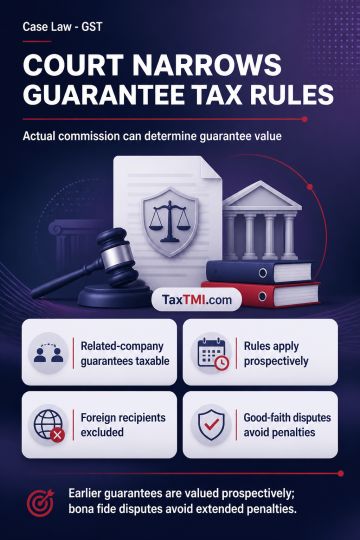
Corporate guarantee valuation permits actual ascertainable commission while barring retroactive application and extended-period penalties for bona fid...
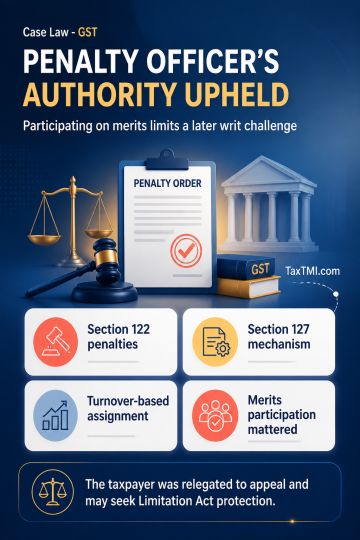
Proper-officer jurisdiction under UPGST penalty provisions upheld; participation on merits prevents bypassing the statutory appellate remedy through w...
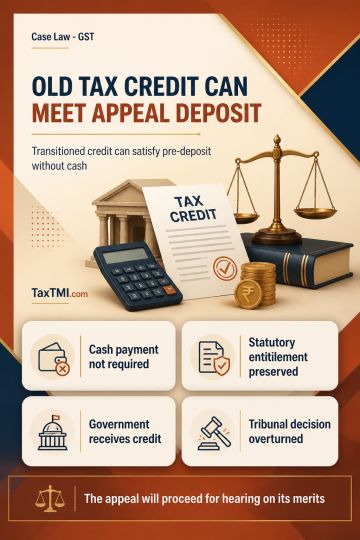
Transitioned CENVAT credit may validly satisfy mandatory pre-deposit requirements for legacy service tax appeals through Electronic Credit Ledger debi...
Building-plan sanction charges require statutory authority; unauthorised fees and GST were quashed, while labour cess must follow prescribed collectio...
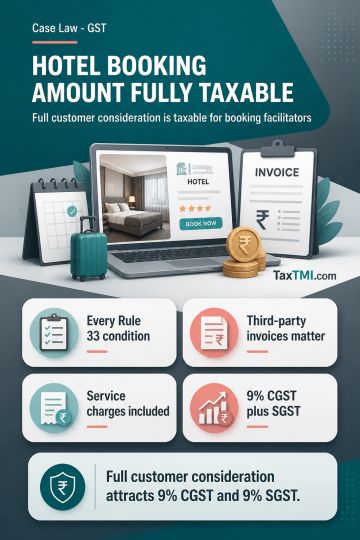
Pure-agent exclusion fails where hotel booking facilitators receive third-party services themselves, making entire customer consideration taxable as r...
Classification of imported goods - If every ‘flange’ available in the market could be used in any industry, then perhaps the classification under a single CTH would have served that purpose, but since one size does not fit all, different classifications are provided. The classification thus depends on, inter alia, functionality as well. Hence, when an item is imported for a specific purpose, if the Revenue does not believe in the classification declared by such importer, then the same could be rejected on some palpable evidence and if required, the Revenue could always insist upon further details / explanation insofar as the function / end-use claimed by such importer is concerned, in order to ascertain the chief/primary function, to arrive at the proper classification, otherwise the purpose of having two Customs Tariff Headings loses its significance, which is not the intention of legislature. - AT
Classification of imported goods - If every ‘flange’ available in the market could be used in any industry, then perhaps the classification under a single CTH would have served that purpose, but since one size does not fit all, different classifications are provided. The classification thus depends on, inter alia, functionality as well. Hence, when an item is imported for a specific purpose, if the Revenue does not believe in the classification declared by such importer, then the same could be rejected on some palpable evidence and if required, the Revenue could always insist upon further details / explanation insofar as the function / end-use claimed by such importer is concerned, in order to ascertain the chief/primary function, to arrive at the proper classification, otherwise the purpose of having two Customs Tariff Headings loses its significance, which is not the intention of legislature. - AT
Note: It is a system-generated summary and is for quick reference only.
 TaxTMI
 of 4801






 Join Channel


 TaxTMI
