Specified regulatory authority income receives conditional tax exemption, subject to non-commercial activity, unchanged income character, and return f...
Tax exemption for regulatory authority income applies retrospectively, subject to non-commercial activity, unchanged income sources, and return-filing...
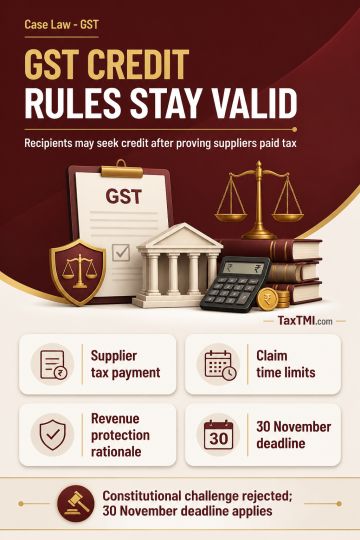
Input tax credit conditions remain constitutionally valid, with eligible recipient claims considered under GST circulars and retrospective filing dead...
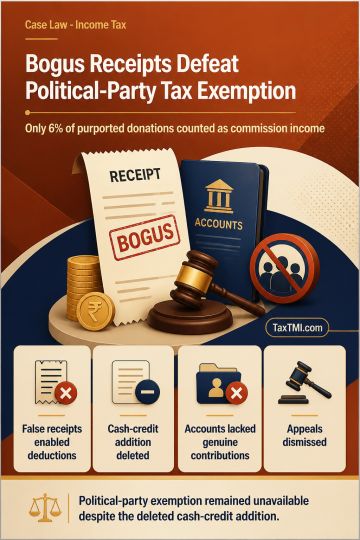
Bogus donation receipts justified commission income assessment and defeated political-party tax exemption for inaccurate accounts and reporting failur...
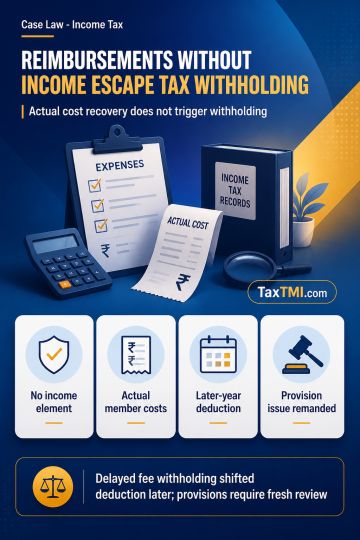
Pure reimbursement without income element escapes tax withholding, while delayed withholding and unsupported provisions face deferred or renewed scrut...
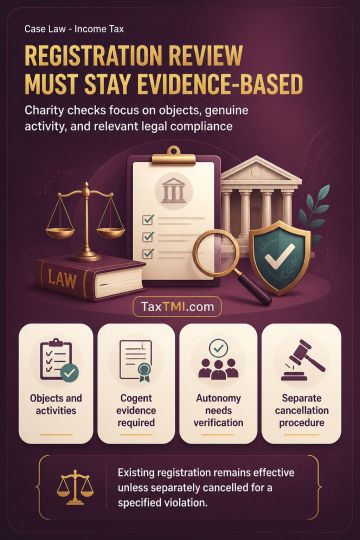
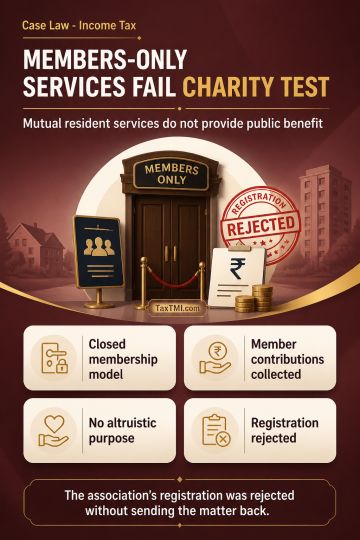
Public benefit requirement defeats charitable registration where residents' association services are reciprocal, member-only facilities governed by mu...
Classification of imported goods - If every ‘flange’ available in the market could be used in any industry, then perhaps the classification under a single CTH would have served that purpose, but since one size does not fit all, different classifications are provided. The classification thus depends on, inter alia, functionality as well. Hence, when an item is imported for a specific purpose, if the Revenue does not believe in the classification declared by such importer, then the same could be rejected on some palpable evidence and if required, the Revenue could always insist upon further details / explanation insofar as the function / end-use claimed by such importer is concerned, in order to ascertain the chief/primary function, to arrive at the proper classification, otherwise the purpose of having two Customs Tariff Headings loses its significance, which is not the intention of legislature. - AT
Classification of imported goods - If every ‘flange’ available in the market could be used in any industry, then perhaps the classification under a single CTH would have served that purpose, but since one size does not fit all, different classifications are provided. The classification thus depends on, inter alia, functionality as well. Hence, when an item is imported for a specific purpose, if the Revenue does not believe in the classification declared by such importer, then the same could be rejected on some palpable evidence and if required, the Revenue could always insist upon further details / explanation insofar as the function / end-use claimed by such importer is concerned, in order to ascertain the chief/primary function, to arrive at the proper classification, otherwise the purpose of having two Customs Tariff Headings loses its significance, which is not the intention of legislature. - AT
Note: It is a system-generated summary and is for quick reference only.
 TaxTMI
 of 4805





 Join Channel


 TaxTMI