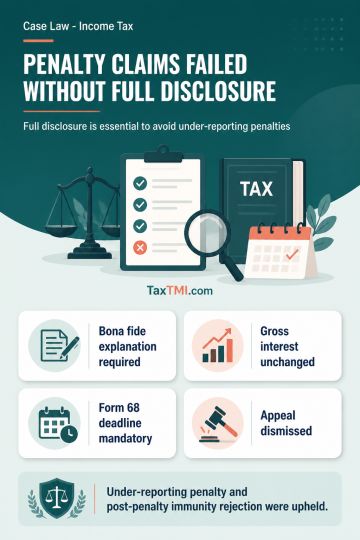
Bona fide disclosure requirements govern under-reporting penalties, and post-penalty immunity applications cannot secure available statutory protectio...
Certificate-of-origin verification procedure governs preferential customs benefits; denial without retroactive verification was set aside with consequ...
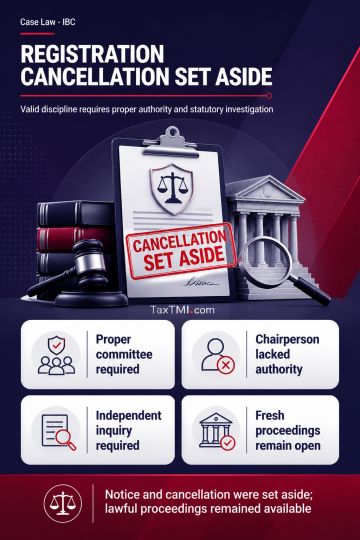
Disciplinary Committee jurisdiction and mandatory investigation requirements invalidated cancellation of an insolvency professional's registration and...
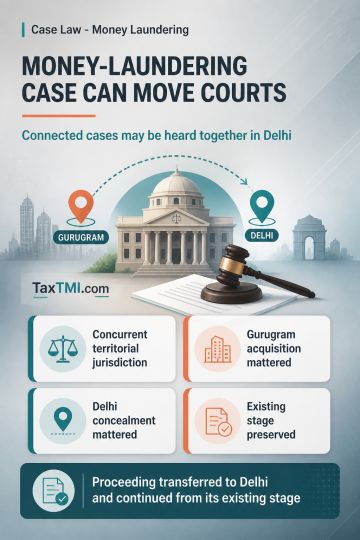
Retention of seized property survives where recorded reasons support proceeds of crime, while stayed investigation periods are excluded from limitatio...
Binding nature of Tribunal Order - Principle of “consistency” - Not only the Tribunal but all the Authorities subordinate to it are bound to follow and comply with the law laid down by the Tribunal. This is necessary to maintain judicial discipline and avoid uncertainty in law. The Tribunal may, in appropriate cases, take a view different from the one taken by it earlier if there is change in law or the fact situation in the context whereof the law was declared by it earlier. The Assessing Authorities or the Statutory Appellate Authorities under the GST Act cannot and should not take a view on question of law contrary to the view taken by the Tribunal. - HC
Binding nature of Tribunal Order - Principle of “consistency” - Not only the Tribunal but all the Authorities subordinate to it are bound to follow and comply with the law laid down by the Tribunal. This is necessary to maintain judicial discipline and avoid uncertainty in law. The Tribunal may, in appropriate cases, take a view different from the one taken by it earlier if there is change in law or the fact situation in the context whereof the law was declared by it earlier. The Assessing Authorities or the Statutory Appellate Authorities under the GST Act cannot and should not take a view on question of law contrary to the view taken by the Tribunal. - HC
Note: It is a system-generated summary and is for quick reference only.
 TaxTMI
 of 4798












 Join Channel


 TaxTMI