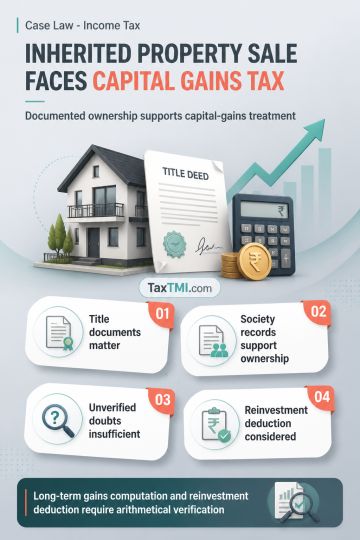
Inherited property sale proceeds require capital-gains treatment where ownership is supported by evidence, not suspicion or unverified signature doubt...
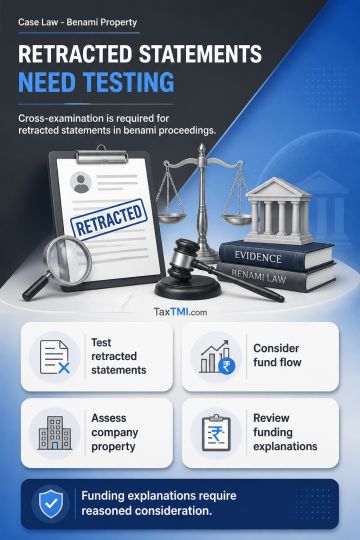
Cross-examination of retracted statements is essential where foundational evidence supports a benami allegation and documented funding explanations re...
Capital-goods exemption covers plant-modernisation accessories, while the import restriction applies only to earlier capital-goods components and spar...
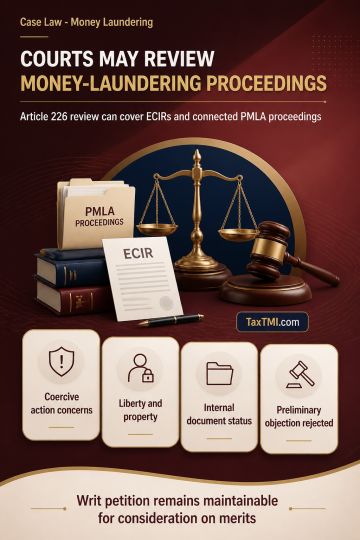
Constitutional judicial review permits challenges to ECIRs and connected money-laundering proceedings where coercive action affects fundamental intere...
Without Sufficient Cause - There is no ambiguity in holding that in the presence of the expression “without sufficient cause” in sub-section (5) of Section 7 of the OET Act and the petitioner(s) having justified by showing sufficient cause for failure to deposit amount of tax due along with the return, which cannot be treated as admitted tax in view of legal position contained in paragraph 30 of Reliance Industries Ltd. - HC
Without Sufficient Cause - There is no ambiguity in holding that in the presence of the expression “without sufficient cause” in sub-section (5) of Section 7 of the OET Act and the petitioner(s) having justified by showing sufficient cause for failure to deposit amount of tax due along with the return, which cannot be treated as admitted tax in view of legal position contained in paragraph 30 of Reliance Industries Ltd. - HC
Note: It is a system-generated summary and is for quick reference only.
 TaxTMI
 of 4784







 Join Channel


 TaxTMI