Clean slate principle extinguishes uncrystallised operational claims and bars continuation of pending recovery and arbitral proceedings after plan app...
Works contract classification governs composite layout-development contracts where VAT-paid goods are transferred alongside construction and infrastru...
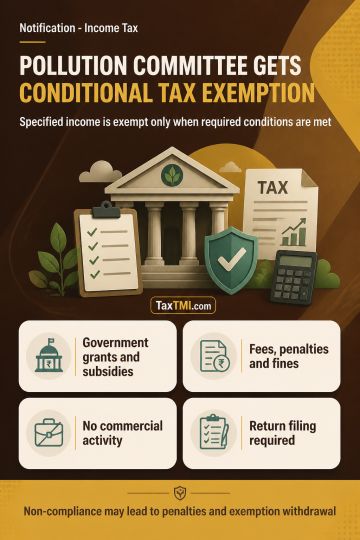
Specified income tax exemption for pollution control body remains conditional on non-commercial activity, unchanged income character, and return filin...
Jurisdictional facts in certificate-of-origin discrepancies can support customs show-cause proceedings, leaving factual explanations for departmental ...
Dishonor of Cheque - a person, who has been held guilty u/s 138 of the Act of 1881 can be punished with imprisonment for a term which may extend up to two years, or with fine which may extend to twice the amount of the cheque or with both. Thus, there is a discretion left with the Criminal Court either to sentence the accused with imprisonment or to punish the accused with the sentence of fine upon considering the facts and circumstances of the case. Imposition of jail sentence is not mandatory for offence u/s 138 of the Act of 1881. - HC
Dishonor of Cheque - a person, who has been held guilty u/s 138 of the Act of 1881 can be punished with imprisonment for a term which may extend up to two years, or with fine which may extend to twice the amount of the cheque or with both. Thus, there is a discretion left with the Criminal Court either to sentence the accused with imprisonment or to punish the accused with the sentence of fine upon considering the facts and circumstances of the case. Imposition of jail sentence is not mandatory for offence u/s 138 of the Act of 1881. - HC
Note: It is a system-generated summary and is for quick reference only.
 TaxTMI
 of 4798

















 Join Channel


 TaxTMI