Defined public benefit can retain charitable character; registration renewal requires examining genuine activities and legal compliance, not surplus a...
Capital reduction is distinct from share buy-back, preventing buy-back tax; restructuring interest and related business deductions also survive scruti...
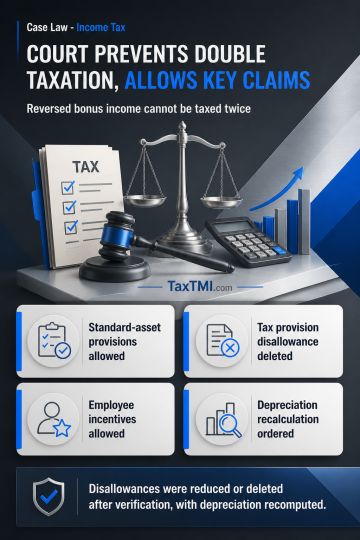
Transfer pricing and tax deductions upheld on established principles, while employee contributions and warranty provisions returned for fresh examinat...
Captive transfer pricing relies on industrial consumer tariffs, while genuine quotations can benchmark effluent treatment transfers under the Other Me...
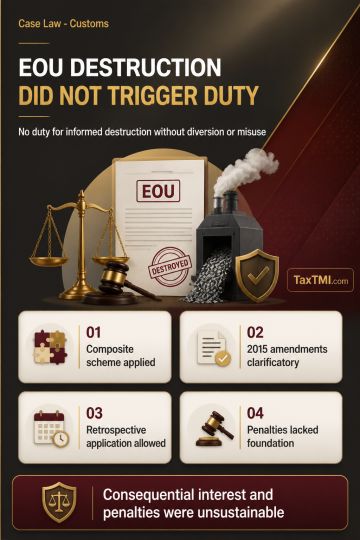
Specific tariff classification for ophthalmic instruments and extended limitation principles determine the treatment of duty demands, confiscation, an...
Compounding of offence under Section 266G of the Companies Act, 1956 - on facts, the nature of offence which the company has charged does not invite with imprisonment or imprisonment and fine, but the penalty imposed is punishable with fine, which may extend upto five thousand rupees and where the contravention is continuing one, with a further fine, which may extend to five hundred rupees for everyday thereafter. Thus, the nature of offence is such that it is compoundable, and the same is just and proper. - HC
Compounding of offence under Section 266G of the Companies Act, 1956 - on facts, the nature of offence which the company has charged does not invite with imprisonment or imprisonment and fine, but the penalty imposed is punishable with fine, which may extend upto five thousand rupees and where the contravention is continuing one, with a further fine, which may extend to five hundred rupees for everyday thereafter. Thus, the nature of offence is such that it is compoundable, and the same is just and proper. - HC
Note: It is a system-generated summary and is for quick reference only.
 TaxTMI
 of 4805

















 Join Channel


 TaxTMI