Retention of seized property survives where recorded reasons support proceeds of crime, while stayed investigation periods are excluded from limitatio...
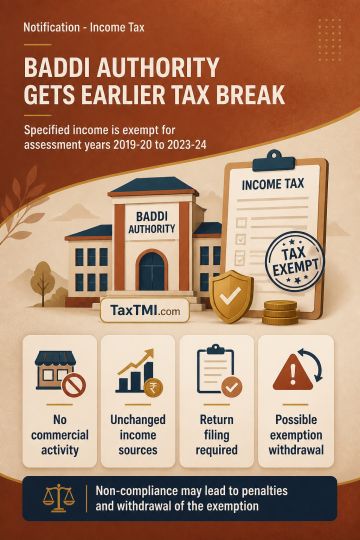
Specified income of Baddi Barotiwala Nalagarh Development Authority receives conditional tax exemption, retrospectively covering its designated assess...
Specified development authority income receives retrospective tax exemption, subject to non-commercial activity, unchanged income sources, and return-...
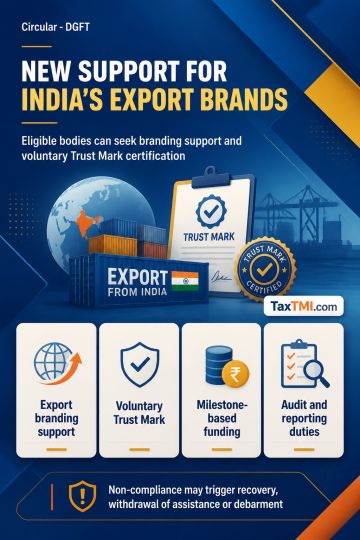
Unified Brand India framework introduces voluntary Trust Mark certification and funding support for export branding, packaging and global promotional ...
Origin Declaration authentication governs preferential tariff claims under India-UK CETA, requiring a validated reference number before import clearan...
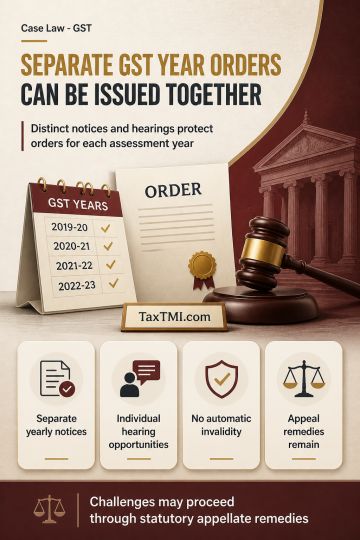
Separate assessment orders for different years remain valid when distinct notices and hearing opportunities prevent prejudice from combined proceeding...
Compounding of offence under Section 266G of the Companies Act, 1956 - on facts, the nature of offence which the company has charged does not invite with imprisonment or imprisonment and fine, but the penalty imposed is punishable with fine, which may extend upto five thousand rupees and where the contravention is continuing one, with a further fine, which may extend to five hundred rupees for everyday thereafter. Thus, the nature of offence is such that it is compoundable, and the same is just and proper. - HC
Compounding of offence under Section 266G of the Companies Act, 1956 - on facts, the nature of offence which the company has charged does not invite with imprisonment or imprisonment and fine, but the penalty imposed is punishable with fine, which may extend upto five thousand rupees and where the contravention is continuing one, with a further fine, which may extend to five hundred rupees for everyday thereafter. Thus, the nature of offence is such that it is compoundable, and the same is just and proper. - HC
Note: It is a system-generated summary and is for quick reference only.
 TaxTMI
 of 4805











 Join Channel


 TaxTMI
