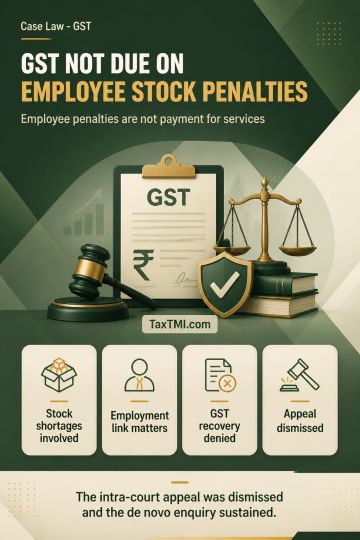
Employee stock-shortage penalties do not constitute consideration for services, preventing GST collection under Schedule II in employment relationship...
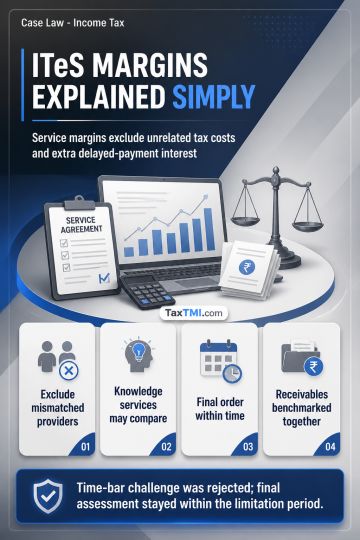
Transfer-pricing treatment of ITeS margins excludes pass-through tax recoveries and separate delayed-receivables interest after working-capital adjust...
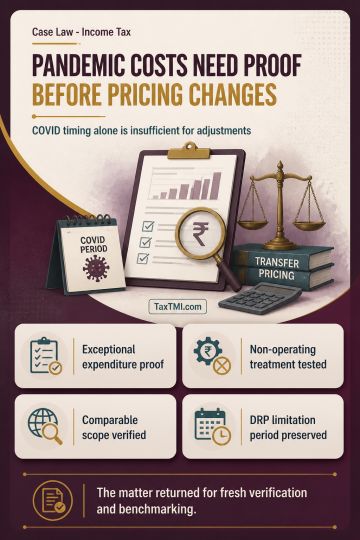
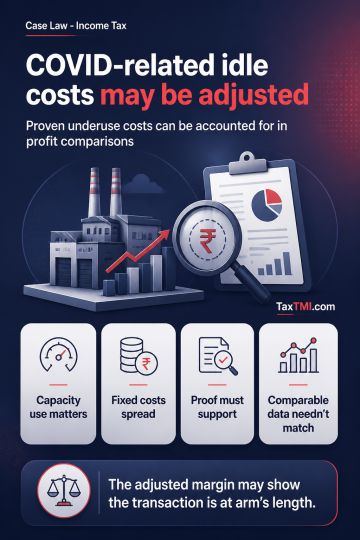
Capacity-utilisation adjustments under TNMM can neutralise substantiated COVID-related idle costs where underutilisation materially affects profitabil...
Page of 4830
Press 'Enter' after typing page number.
181 to 200 of 96587 Results
❮
❯
❯❯
0 / 200
Expand Note
Add to Folder
No Folders have been created
+
Are you sure you want to delete "My most important" ?
Cancellation of the IEC - EPCG Scheme - levy of penalty - the learned Judge while disposing the writ petition filed by the appellant, challenging the order of cancellation of IEC passed by the third respondent, has correctly directed the jurisdictional officer under the Act, to issue appropriate show cause notice to the appellant, within a period of 30 days from the date of receipt of a copy of the order; further directed the appellant to file a reply within a period of 30 days; and thereafter, directed the jurisdictional officer to pass appropriate order, in accordance with law, within a period of 90 days, after giving adequate opportunity of hearing to the appellant. Further, the interest of the appellant was rightly protected by extending the status quo order for a period of 90 days. - HC
Cancellation of the IEC - EPCG Scheme - levy of penalty - the learned Judge while disposing the writ petition filed by the appellant, challenging the order of cancellation of IEC passed by the third respondent, has correctly directed the jurisdictional officer under the Act, to issue appropriate show cause notice to the appellant, within a period of 30 days from the date of receipt of a copy of the order; further directed the appellant to file a reply within a period of 30 days; and thereafter, directed the jurisdictional officer to pass appropriate order, in accordance with law, within a period of 90 days, after giving adequate opportunity of hearing to the appellant. Further, the interest of the appellant was rightly protected by extending the status quo order for a period of 90 days. - HC
Note: It is a system-generated summary and is for quick reference only.
 TaxTMI
  TaxTMI
 of 4830








 Join Channel


