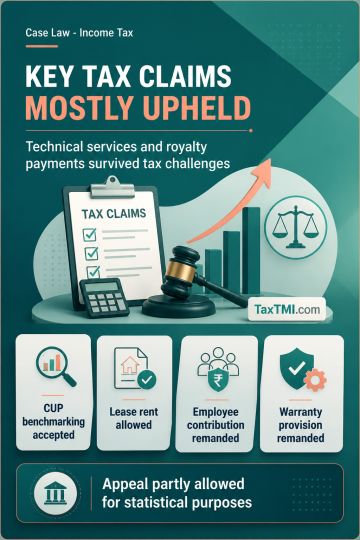
Transfer pricing and tax deductions upheld on established principles, while employee contributions and warranty provisions returned for fresh examinat...
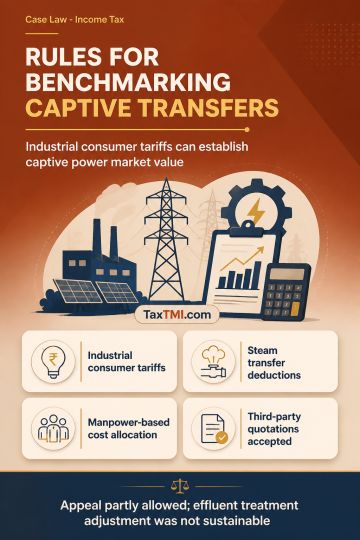
Captive transfer pricing relies on industrial consumer tariffs, while genuine quotations can benchmark effluent treatment transfers under the Other Me...
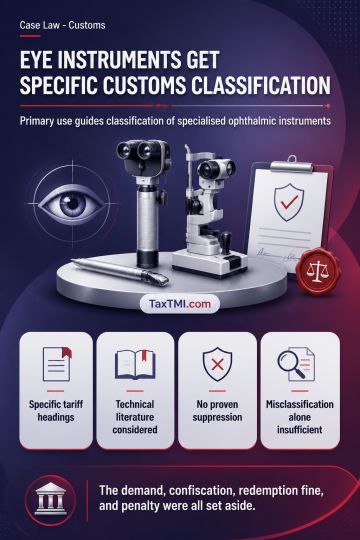
Specific tariff classification for ophthalmic instruments and extended limitation principles determine the treatment of duty demands, confiscation, an...
Integrated golf function determines classification, placing launch monitors and simulators under other golf equipment rather than measuring instrument...
Public servant status under anti-corruption law extends to recognised stock exchange leadership; constitutional and sanction challenges do not succeed...
Acquiescence, homebuyer protection and clean-slate resolution principles prevent landowners from disrupting an integrated project through late termina...
Levy of IGST - Scope and power of state legislature versus GST Council - The recommendations of the GST Council are not binding on the Union and States - Neither does Article 279A begin with a non-obstante clause nor does Article 246A state that it is subject to the provisions of Article 279A. The Parliament and the State legislatures possess simultaneous power to legislate on GST. Article 246A does not envisage a repugnancy provision to resolve the inconsistencies between the Central and the State laws on GST. The ‘recommendations’ of the GST Council are the product of a collaborative dialogue involving the Union and States. They are recommendatory in nature. To regard them as binding edicts would disrupt fiscal federalism, where both the Union and the States are conferred equal power to legislate on GST. - SC
Levy of IGST - Scope and power of state legislature versus GST Council - The recommendations of the GST Council are not binding on the Union and States - Neither does Article 279A begin with a non-obstante clause nor does Article 246A state that it is subject to the provisions of Article 279A. The Parliament and the State legislatures possess simultaneous power to legislate on GST. Article 246A does not envisage a repugnancy provision to resolve the inconsistencies between the Central and the State laws on GST. The ‘recommendations’ of the GST Council are the product of a collaborative dialogue involving the Union and States. They are recommendatory in nature. To regard them as binding edicts would disrupt fiscal federalism, where both the Union and the States are conferred equal power to legislate on GST. - SC
Note: It is a system-generated summary and is for quick reference only.
 TaxTMI
 of 4805











 Join Channel


 TaxTMI
