Approved resolution plans extinguish unsubmitted pre-approval tax claims, preventing later recovery outside the insolvency process and preserving a cl...
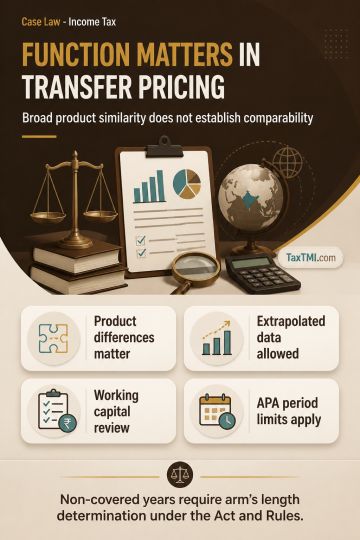
Transfer pricing comparability requires functional alignment and permits working capital adjustment, while APA margins cannot govern non-covered years...
Treaty benefit, goodwill depreciation and hedging costs: export commission disallowed, while key business deductions and depreciation claims succeeded...
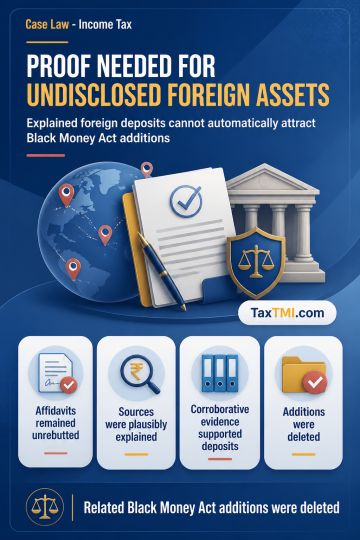
Undisclosed foreign asset classification requires an unexplained source; unrebutted affidavits and corroborative evidence defeated the Black Money Act...
Insolvency and BankruptcyFebruary 11, 2022Case LawsAT
Initiation of CIRP - The I&B Code, 2016 is not a ‘Debt Enforcement Procedure’. The application of an ‘operational creditor’ is not maintainable, if the ‘Corporate Debtor’ has a dispute about its outstanding/debt. The ‘dispute’ is to be seen by the ‘Adjudicating Authority’ as one based on tenable substantial grounds. In this connection, it is relevantly pointed out that if there is a ‘dispute’ about the debt, then, it is for the ‘applicant’ to approach the competent Civil Court to decide the triable issues. In short, the ‘Adjudicating Authority/Appellate Tribunal’ is not to be utilised as a ‘Debt Collecting Agent’. - AT
Initiation of CIRP - The I&B Code, 2016 is not a ‘Debt Enforcement Procedure’. The application of an ‘operational creditor’ is not maintainable, if the ‘Corporate Debtor’ has a dispute about its outstanding/debt. The ‘dispute’ is to be seen by the ‘Adjudicating Authority’ as one based on tenable substantial grounds. In this connection, it is relevantly pointed out that if there is a ‘dispute’ about the debt, then, it is for the ‘applicant’ to approach the competent Civil Court to decide the triable issues. In short, the ‘Adjudicating Authority/Appellate Tribunal’ is not to be utilised as a ‘Debt Collecting Agent’. - AT
Note: It is a system-generated summary and is for quick reference only.
 TaxTMI
  TaxTMI
 of 4821










 Join Channel


