Inherited property sale proceeds require capital-gains treatment where ownership is supported by evidence, not suspicion or unverified signature doubt...
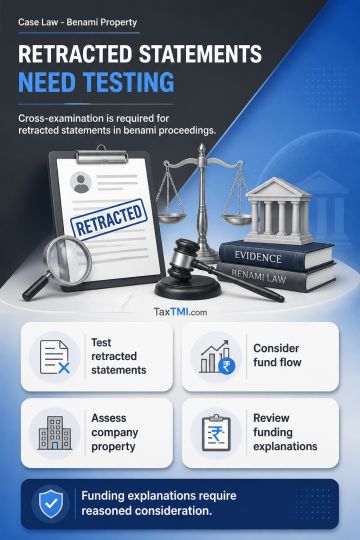
Cross-examination of retracted statements is essential where foundational evidence supports a benami allegation and documented funding explanations re...
Capital-goods exemption covers plant-modernisation accessories, while the import restriction applies only to earlier capital-goods components and spar...
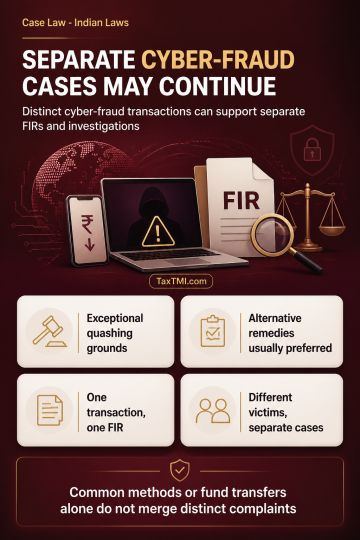
Constitutional judicial review permits challenges to ECIRs and connected money-laundering proceedings where coercive action affects fundamental intere...
Insolvency and BankruptcyFebruary 11, 2022Case LawsAT
Initiation of CIRP - The I&B Code, 2016 is not a ‘Debt Enforcement Procedure’. The application of an ‘operational creditor’ is not maintainable, if the ‘Corporate Debtor’ has a dispute about its outstanding/debt. The ‘dispute’ is to be seen by the ‘Adjudicating Authority’ as one based on tenable substantial grounds. In this connection, it is relevantly pointed out that if there is a ‘dispute’ about the debt, then, it is for the ‘applicant’ to approach the competent Civil Court to decide the triable issues. In short, the ‘Adjudicating Authority/Appellate Tribunal’ is not to be utilised as a ‘Debt Collecting Agent’. - AT
Initiation of CIRP - The I&B Code, 2016 is not a ‘Debt Enforcement Procedure’. The application of an ‘operational creditor’ is not maintainable, if the ‘Corporate Debtor’ has a dispute about its outstanding/debt. The ‘dispute’ is to be seen by the ‘Adjudicating Authority’ as one based on tenable substantial grounds. In this connection, it is relevantly pointed out that if there is a ‘dispute’ about the debt, then, it is for the ‘applicant’ to approach the competent Civil Court to decide the triable issues. In short, the ‘Adjudicating Authority/Appellate Tribunal’ is not to be utilised as a ‘Debt Collecting Agent’. - AT
Note: It is a system-generated summary and is for quick reference only.
 TaxTMI
  TaxTMI
 of 4817















 Join Channel