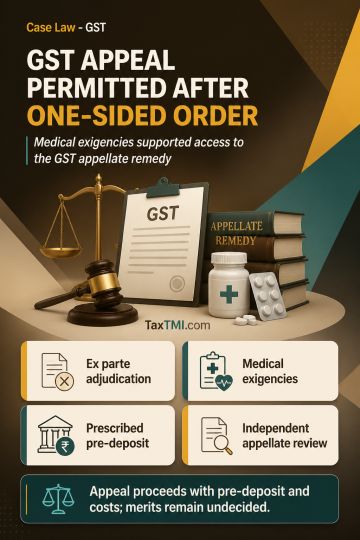
Alternative GST remedy permitted protective writ intervention for ex parte adjudication, preserving independent appellate review of input tax credit d...
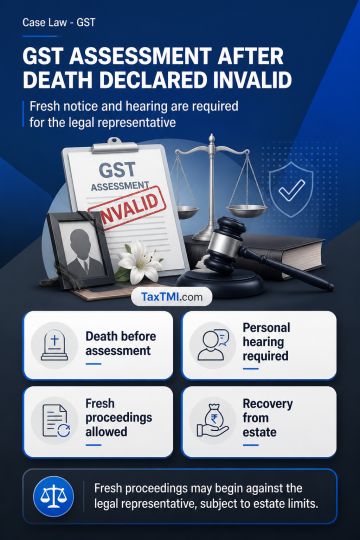
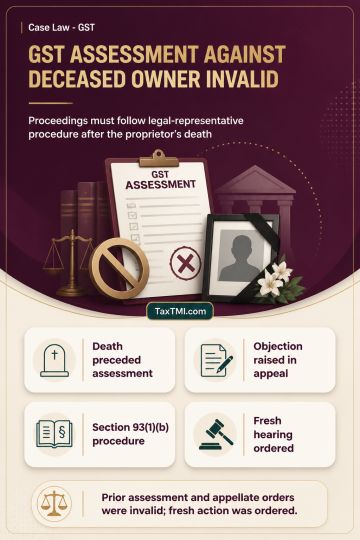
Assessment against deceased sole proprietor requires proceedings against the legal representative, rendering prior assessment and appellate orders inv...
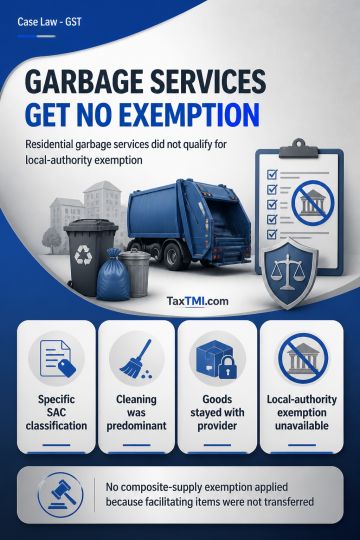
Residential waste collection classification under SAC 999423 defeats composite-supply exemption where facilitating goods are not transferred to the lo...
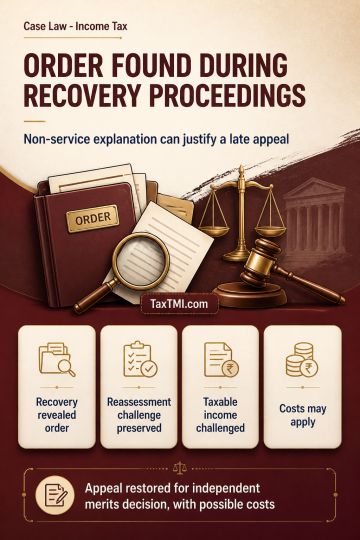
Condonation of delay permits statutory appeal restoration where inadequate service explanation prevented consideration of reassessment and taxable-inc...
Insolvency and BankruptcyFebruary 11, 2022Case LawsAT
Initiation of CIRP - The I&B Code, 2016 is not a ‘Debt Enforcement Procedure’. The application of an ‘operational creditor’ is not maintainable, if the ‘Corporate Debtor’ has a dispute about its outstanding/debt. The ‘dispute’ is to be seen by the ‘Adjudicating Authority’ as one based on tenable substantial grounds. In this connection, it is relevantly pointed out that if there is a ‘dispute’ about the debt, then, it is for the ‘applicant’ to approach the competent Civil Court to decide the triable issues. In short, the ‘Adjudicating Authority/Appellate Tribunal’ is not to be utilised as a ‘Debt Collecting Agent’. - AT
Initiation of CIRP - The I&B Code, 2016 is not a ‘Debt Enforcement Procedure’. The application of an ‘operational creditor’ is not maintainable, if the ‘Corporate Debtor’ has a dispute about its outstanding/debt. The ‘dispute’ is to be seen by the ‘Adjudicating Authority’ as one based on tenable substantial grounds. In this connection, it is relevantly pointed out that if there is a ‘dispute’ about the debt, then, it is for the ‘applicant’ to approach the competent Civil Court to decide the triable issues. In short, the ‘Adjudicating Authority/Appellate Tribunal’ is not to be utilised as a ‘Debt Collecting Agent’. - AT
Note: It is a system-generated summary and is for quick reference only.
 TaxTMI
  TaxTMI
 of 4817






 Join Channel


