TNMM functional comparability requires excluding rice manufacturers from a pure Basmati rice trader's benchmark and recognising operating export recei...
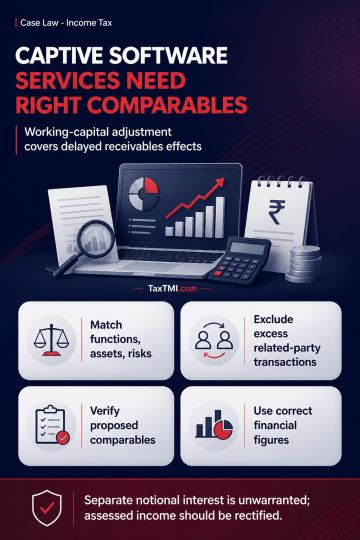
Working-capital adjustment subsumes delayed-receivable effects in TNMM benchmarking of captive software-development services, avoiding separate notion...
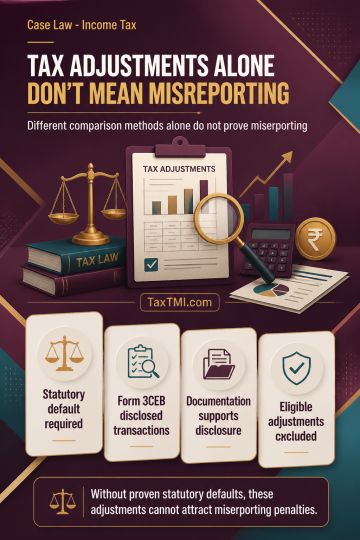
Transfer-pricing comparability requires exclusion of financially illogical super-profit comparables and correction of unsupported annual-report and ma...
Charitable character assessment preserves Section 80G approval despite inclusive spiritual teachings and incidental religious expenditure within the s...
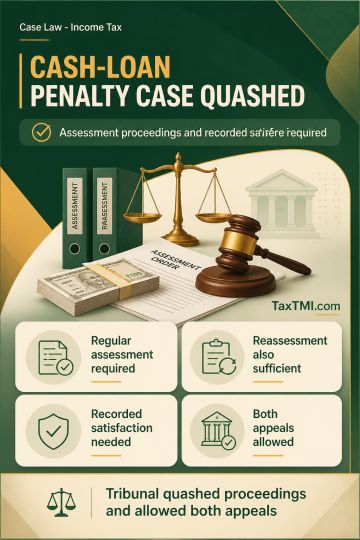
Penalty proceedings for cash-loan acceptance require assessment proceedings and recorded Assessing Officer satisfaction; absent these, the proceedings...
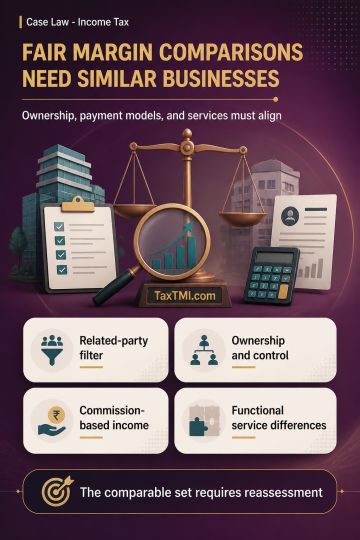
Functional comparability governs software-service benchmarking: dissimilar companies are excluded, while related-party filters, margins and working-ca...
Smuggling - Gold - plea bargaining versus compounding of offences - The concept of plea bargaining was introduced in Indian criminal jurisprudence by way of amendment Act of 2005 in the Code of Criminal Procedure under Chapter XXIA. Chapter XXIA delineates the guidelines for a Mutually Satisfactory Disposition (MSD). - Had the legislature intended to exclude the applicability of Chapter XXIA Cr.P.C. to those enactments where there are provisions for compounding the offence, then it would have explicitly mentioned the same in Chapter XXIA Cr.P.C. Chapter XXIA Cr.P.C. was introduced to include all statutes, save those that were specifically excluded under Section 265-A(2). It cannot be said that the legislature was unaware of the Customs Act, 1962, while devising the chapter on plea bargaining. Therefore, the presence of Section 137(3) of the Customs Act, 1962, will not take away the applicability of Chapter XXIA Cr.P.C. - HC
Smuggling - Gold - plea bargaining versus compounding of offences - The concept of plea bargaining was introduced in Indian criminal jurisprudence by way of amendment Act of 2005 in the Code of Criminal Procedure under Chapter XXIA. Chapter XXIA delineates the guidelines for a Mutually Satisfactory Disposition (MSD). - Had the legislature intended to exclude the applicability of Chapter XXIA Cr.P.C. to those enactments where there are provisions for compounding the offence, then it would have explicitly mentioned the same in Chapter XXIA Cr.P.C. Chapter XXIA Cr.P.C. was introduced to include all statutes, save those that were specifically excluded under Section 265-A(2). It cannot be said that the legislature was unaware of the Customs Act, 1962, while devising the chapter on plea bargaining. Therefore, the presence of Section 137(3) of the Customs Act, 1962, will not take away the applicability of Chapter XXIA Cr.P.C. - HC
Note: It is a system-generated summary and is for quick reference only.
 TaxTMI
  TaxTMI
 of 4830













 Join Channel


