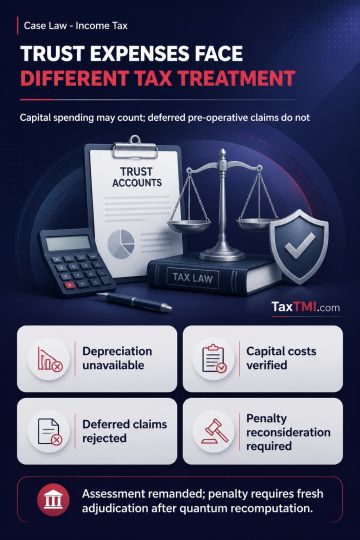
Charitable trust income application permits verified capital expenditure but rejects deferred pre-operative claims and requires reconsideration of con...
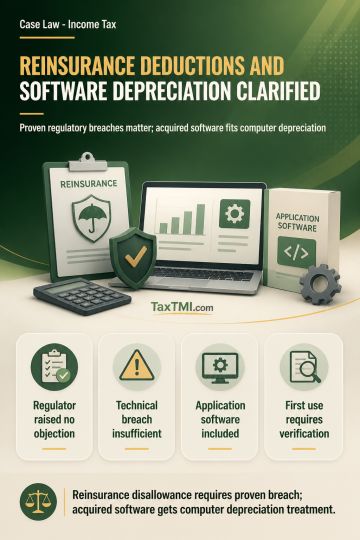
Reinsurance premium deductions require established regulatory breaches, while independently acquired software qualifies within the computer depreciati...
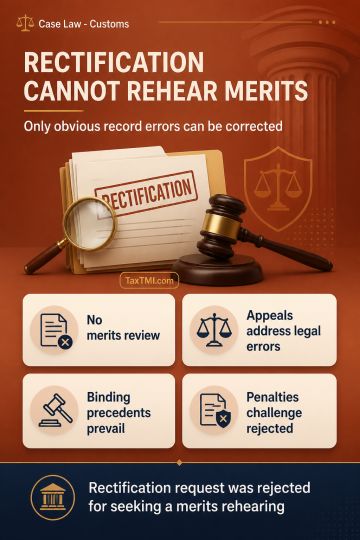
Rectification of mistake remains limited to self-evident record errors, preventing merits review through miscellaneous applications and preserving fin...
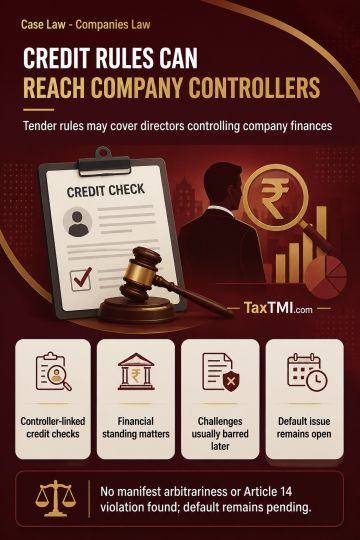
Tender creditworthiness conditions may extend to de facto Promoter Directors, with post-participation challenges generally barred absent arbitrariness...
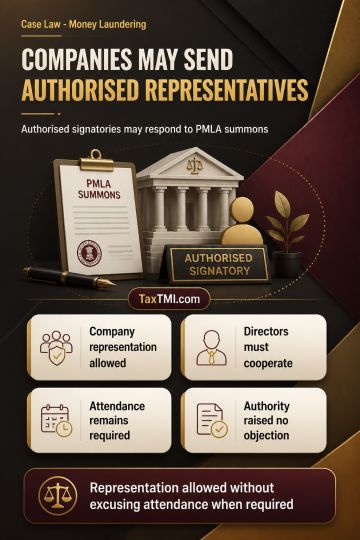
Corporate representation in PMLA summons proceedings permitted through an authorised signatory, subject to directors' continuing cooperation and atten...
Dishonor of Cheque - discharge of legally enforceable debt - the defence sought to be put forth relating to the cheque and other documents having been obtained by force, cannot be accepted as a probable defence when the respondent successfully discharged the initial burden cast on him of establishing that the cheque signed by the appellant was issued in his favour toward discharge of a legally recoverable amount. The fact that the appellant has admitted about an earlier transaction where according to him, he had borrowed the amount and repaid the same in the year 1995, would indicate that the appellant and the respondent had entered into financial transactions earlier as well and another transaction was probable between the parties who were known to each other. - SC
Dishonor of Cheque - discharge of legally enforceable debt - the defence sought to be put forth relating to the cheque and other documents having been obtained by force, cannot be accepted as a probable defence when the respondent successfully discharged the initial burden cast on him of establishing that the cheque signed by the appellant was issued in his favour toward discharge of a legally recoverable amount. The fact that the appellant has admitted about an earlier transaction where according to him, he had borrowed the amount and repaid the same in the year 1995, would indicate that the appellant and the respondent had entered into financial transactions earlier as well and another transaction was probable between the parties who were known to each other. - SC
Note: It is a system-generated summary and is for quick reference only.
 TaxTMI
 of 4805




 Join Channel


 TaxTMI
