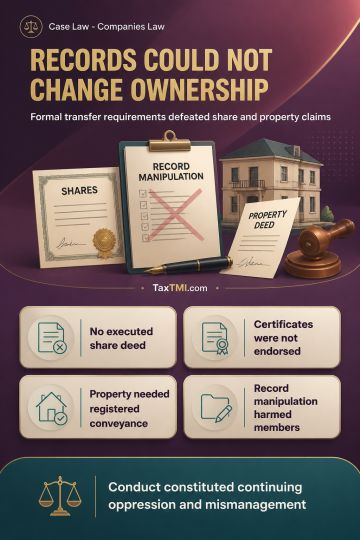
Statutory transfer formalities invalidated alleged share and property transfers, while retrospective record manipulation constituted oppression and mi...
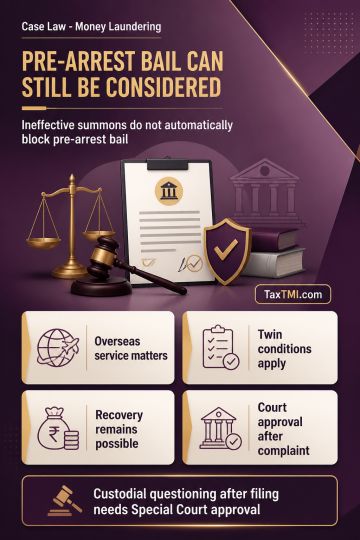
Provisional attachment of laundered funds and equivalent-value property sustained, with statutory protection limited to pension, gratuity and providen...
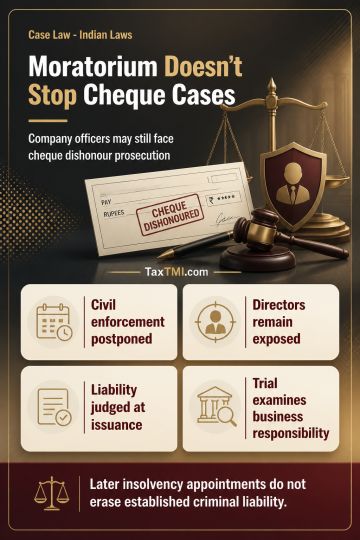
Insolvency moratorium does not shield company officers from cheque dishonour prosecution for liability arising before corporate insolvency proceedings...
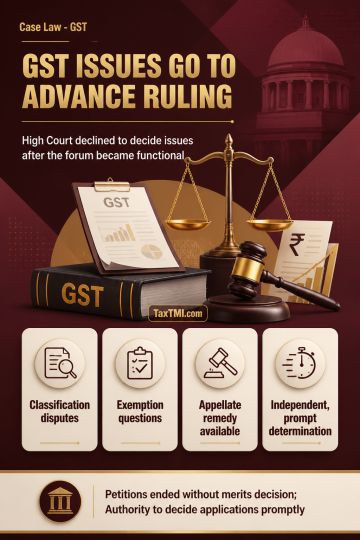
Advance-ruling mechanism governs pending GST classification, exemption and taxability disputes, limiting writ review once the specialised forum functi...
Page of 4805
Press 'Enter' after typing page number.
921 to 940 of 96092 Results
❮
❯
❯❯
0 / 200
Expand Note
Add to Folder
No Folders have been created
+
Are you sure you want to delete "My most important" ?
Dishonor of Cheque - discharge of legally enforceable debt - the defence sought to be put forth relating to the cheque and other documents having been obtained by force, cannot be accepted as a probable defence when the respondent successfully discharged the initial burden cast on him of establishing that the cheque signed by the appellant was issued in his favour toward discharge of a legally recoverable amount. The fact that the appellant has admitted about an earlier transaction where according to him, he had borrowed the amount and repaid the same in the year 1995, would indicate that the appellant and the respondent had entered into financial transactions earlier as well and another transaction was probable between the parties who were known to each other. - SC
Dishonor of Cheque - discharge of legally enforceable debt - the defence sought to be put forth relating to the cheque and other documents having been obtained by force, cannot be accepted as a probable defence when the respondent successfully discharged the initial burden cast on him of establishing that the cheque signed by the appellant was issued in his favour toward discharge of a legally recoverable amount. The fact that the appellant has admitted about an earlier transaction where according to him, he had borrowed the amount and repaid the same in the year 1995, would indicate that the appellant and the respondent had entered into financial transactions earlier as well and another transaction was probable between the parties who were known to each other. - SC
Note: It is a system-generated summary and is for quick reference only.
 TaxTMI
 of 4805






 Join Channel


 TaxTMI