Arrest safeguards require disclosed grounds, relative intimation and transit remand, while duplicate prosecution under the CGST framework is unsustain...
Document Identification Number defects can invalidate GST assessments, with delayed challenges entertained conditionally where patent irregularities e...
Windmill commissioning evidence supported higher depreciation where grid connection and electricity generation proved operational use before the relev...
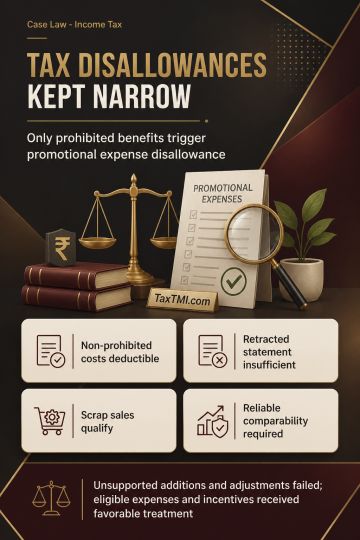
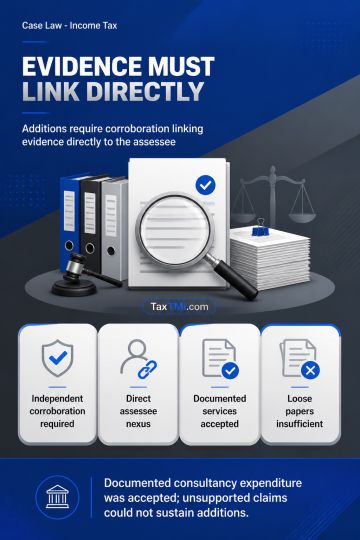
Pharmaceutical promotion and transfer-pricing comparability principles limited disallowances, while uncorroborated search allegations and unsupported ...
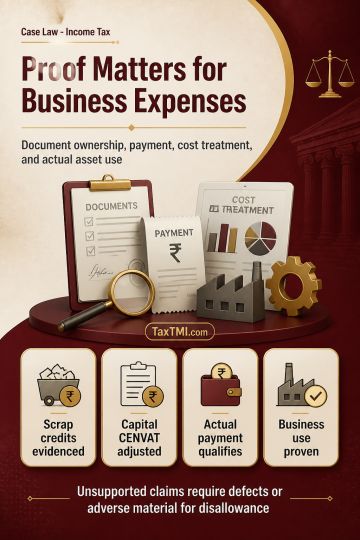
Business expenditure substantiation supports scrap credits, statutory payments and expense claims, while depreciation requires proof of actual busines...
Dishonor of Cheque - discharge of legally enforceable debt - the defence sought to be put forth relating to the cheque and other documents having been obtained by force, cannot be accepted as a probable defence when the respondent successfully discharged the initial burden cast on him of establishing that the cheque signed by the appellant was issued in his favour toward discharge of a legally recoverable amount. The fact that the appellant has admitted about an earlier transaction where according to him, he had borrowed the amount and repaid the same in the year 1995, would indicate that the appellant and the respondent had entered into financial transactions earlier as well and another transaction was probable between the parties who were known to each other. - SC
Dishonor of Cheque - discharge of legally enforceable debt - the defence sought to be put forth relating to the cheque and other documents having been obtained by force, cannot be accepted as a probable defence when the respondent successfully discharged the initial burden cast on him of establishing that the cheque signed by the appellant was issued in his favour toward discharge of a legally recoverable amount. The fact that the appellant has admitted about an earlier transaction where according to him, he had borrowed the amount and repaid the same in the year 1995, would indicate that the appellant and the respondent had entered into financial transactions earlier as well and another transaction was probable between the parties who were known to each other. - SC
Note: It is a system-generated summary and is for quick reference only.
 TaxTMI
 of 4805








 Join Channel


 TaxTMI