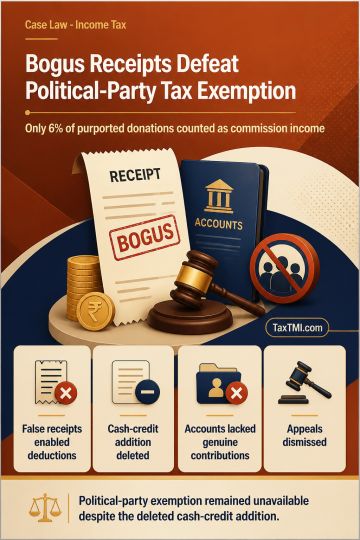
Bogus donation receipts justified commission income assessment and defeated political-party tax exemption for inaccurate accounts and reporting failur...
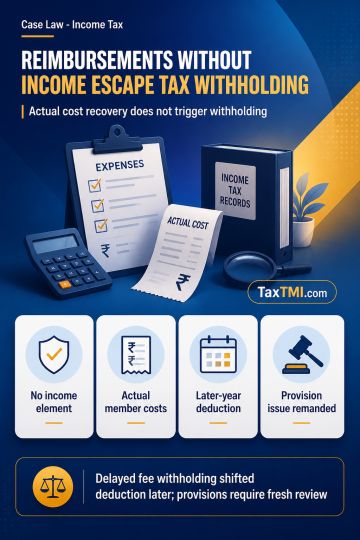
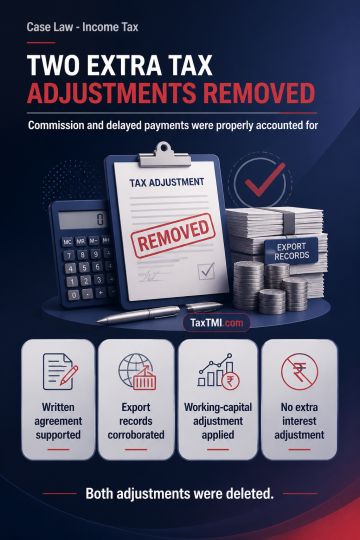
Pure reimbursement without income element escapes tax withholding, while delayed withholding and unsupported provisions face deferred or renewed scrut...
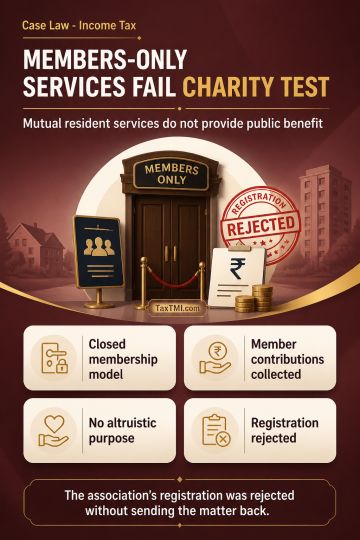
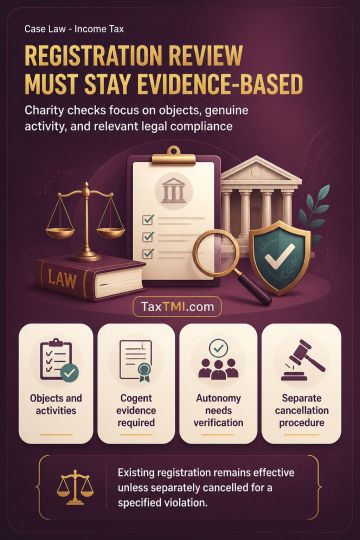
Public benefit requirement defeats charitable registration where residents' association services are reciprocal, member-only facilities governed by mu...
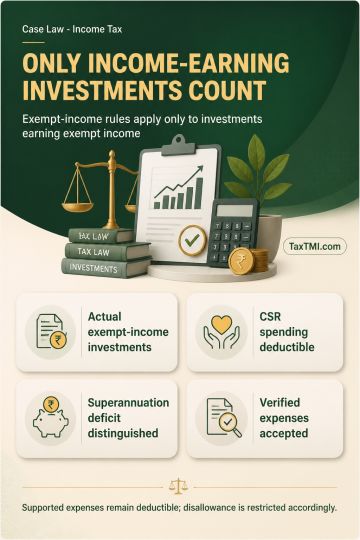
Exempt-income expenditure disallowance is confined to investments that actually generated exempt income, while supported business expenses remain dedu...
Objective characteristics and principal use govern mining-tyre classification, while fresh advance ruling applications may rely on additional technica...
Page of 4805
Press 'Enter' after typing page number.
801 to 820 of 96092 Results
❮
❯
❯❯
0 / 200
Expand Note
Add to Folder
No Folders have been created
+
Are you sure you want to delete "My most important" ?
Dishonor of Cheque - discharge of legally enforceable debt - the defence sought to be put forth relating to the cheque and other documents having been obtained by force, cannot be accepted as a probable defence when the respondent successfully discharged the initial burden cast on him of establishing that the cheque signed by the appellant was issued in his favour toward discharge of a legally recoverable amount. The fact that the appellant has admitted about an earlier transaction where according to him, he had borrowed the amount and repaid the same in the year 1995, would indicate that the appellant and the respondent had entered into financial transactions earlier as well and another transaction was probable between the parties who were known to each other. - SC
Dishonor of Cheque - discharge of legally enforceable debt - the defence sought to be put forth relating to the cheque and other documents having been obtained by force, cannot be accepted as a probable defence when the respondent successfully discharged the initial burden cast on him of establishing that the cheque signed by the appellant was issued in his favour toward discharge of a legally recoverable amount. The fact that the appellant has admitted about an earlier transaction where according to him, he had borrowed the amount and repaid the same in the year 1995, would indicate that the appellant and the respondent had entered into financial transactions earlier as well and another transaction was probable between the parties who were known to each other. - SC
Note: It is a system-generated summary and is for quick reference only.
 TaxTMI
 of 4805



 Join Channel


 TaxTMI