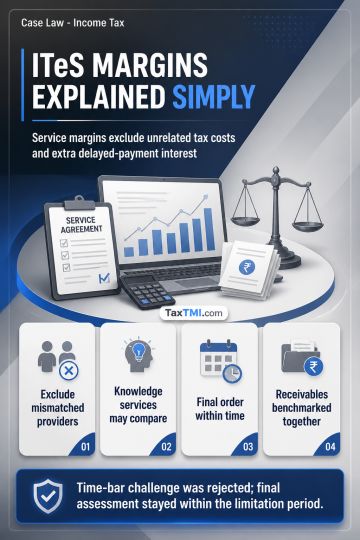
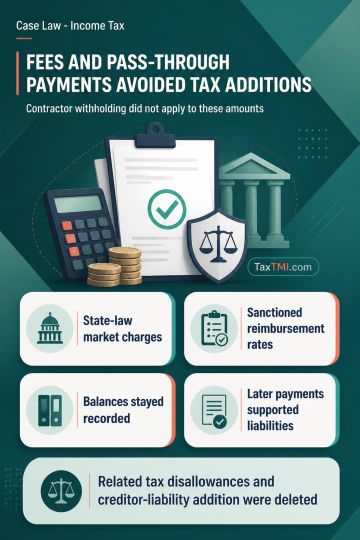
Transfer-pricing treatment of ITeS margins excludes pass-through tax recoveries and separate delayed-receivables interest after working-capital adjust...
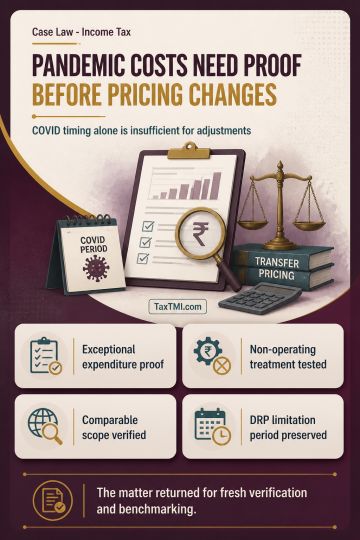
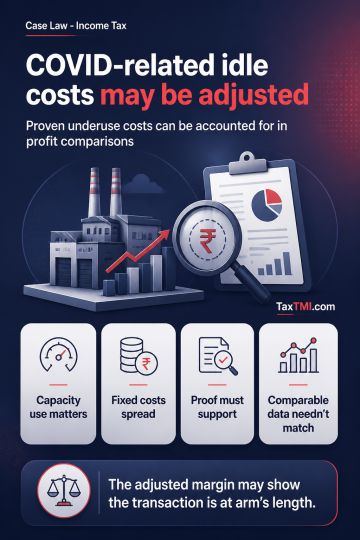
Capacity-utilisation adjustments under TNMM can neutralise substantiated COVID-related idle costs where underutilisation materially affects profitabil...
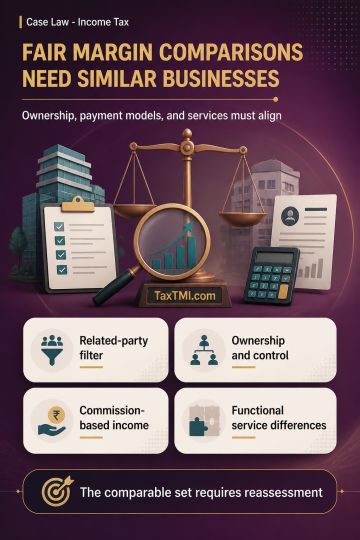
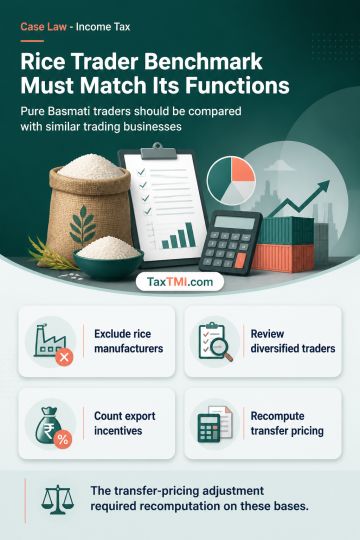
TNMM functional comparability requires excluding rice manufacturers from a pure Basmati rice trader's benchmark and recognising operating export recei...
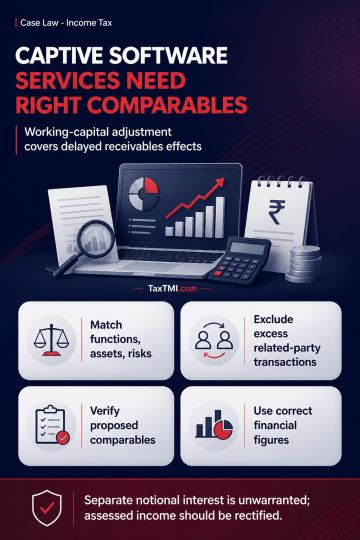
Working-capital adjustment subsumes delayed-receivable effects in TNMM benchmarking of captive software-development services, avoiding separate notion...
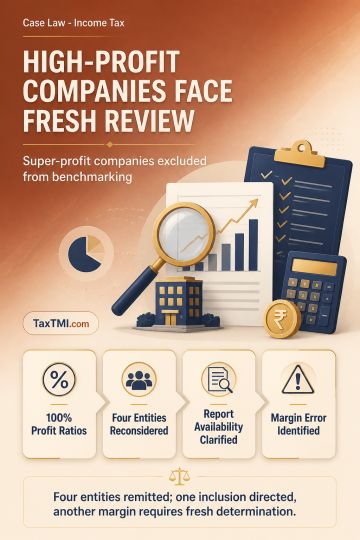
Transfer-pricing comparability requires exclusion of financially illogical super-profit comparables and correction of unsupported annual-report and ma...
Charitable character assessment preserves Section 80G approval despite inclusive spiritual teachings and incidental religious expenditure within the s...
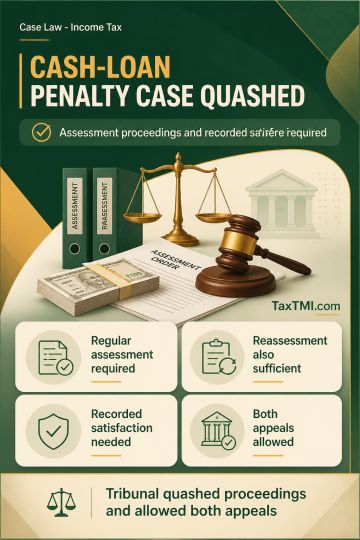
Penalty proceedings for cash-loan acceptance require assessment proceedings and recorded Assessing Officer satisfaction; absent these, the proceedings...
Page of 4828
Press 'Enter' after typing page number.
161 to 180 of 96556 Results
❮
❯
❯❯
0 / 200
Expand Note
Add to Folder
No Folders have been created
+
Are you sure you want to delete "My most important" ?
Insolvency and BankruptcyOctober 26, 2021Case LawsAT
Power of tribunal to review application - It is the well laid down proposition of law that ‘in the absence of any power of ‘Review’ or ‘Recall’ vested with the ‘Adjudicating Authority’ – ‘Appellate Authority’, an order/ judgment passed by it cannot be either Reviewed or Recall as opined by this Tribunal - It cannot be gainsaid that there is no express provision for ‘’Review’’ under the National Company Law Appellate Tribunal Rules, 2016. Moreover, the Applicant/Appellant cannot fall back upon Rule 11 of the NCLAT Rules, 2016 which provides for “inherent powers’’. In fact, Rule 11 of NCLAT Rules, 2016 is not a substantive Rule which showers any power or jurisdiction upon the ‘’Tribunal’’. Undoubtedly, the ‘Tribunal’’ has no power to perform an act which is prohibited by Law.- AT
Power of tribunal to review application - It is the well laid down proposition of law that ‘in the absence of any power of ‘Review’ or ‘Recall’ vested with the ‘Adjudicating Authority’ – ‘Appellate Authority’, an order/ judgment passed by it cannot be either Reviewed or Recall as opined by this Tribunal - It cannot be gainsaid that there is no express provision for ‘’Review’’ under the National Company Law Appellate Tribunal Rules, 2016. Moreover, the Applicant/Appellant cannot fall back upon Rule 11 of the NCLAT Rules, 2016 which provides for “inherent powers’’. In fact, Rule 11 of NCLAT Rules, 2016 is not a substantive Rule which showers any power or jurisdiction upon the ‘’Tribunal’’. Undoubtedly, the ‘Tribunal’’ has no power to perform an act which is prohibited by Law.- AT
Note: It is a system-generated summary and is for quick reference only.
 TaxTMI
  TaxTMI
 of 4828




 Join Channel