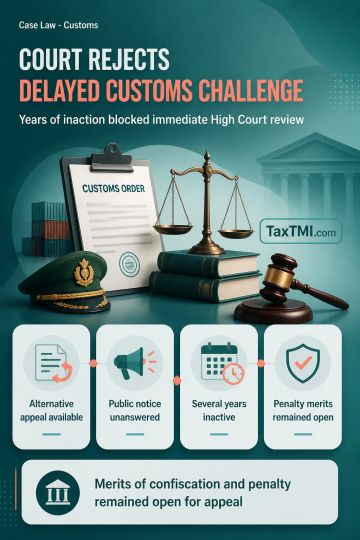
Alternative statutory remedy and unexplained delay barred writ review of customs confiscation adjudication, leaving merits for appellate consideration...
Authorised courier due diligence protects against penalties where declared exports conceal prohibited goods despite proper documentation and customs p...
Customs-controlled container movement now extends to DP World facilities, subject to segregation, inspections, reconciliation, and EXIM cargo priority...
Insolvency and BankruptcyFebruary 3, 2021Case LawsSC
CIRP proceedings - Financial Creditors - Related party - while the default rule under the first proviso to Section 21(2) is that only those financial creditors that are related parties in praesenti would be debarred from the CoC, those related party financial creditors that cease to be related parties in order to circumvent the exclusion under the first proviso to Section 21(2), should also be considered as being covered by the exclusion thereunder. Mr Kaul has argued, correctly in our opinion, that if this interpretation is not given to the first proviso of Section 21(2), then a related party financial creditor can devise a mechanism to remove its label of a ‘related party’ before the Corporate Debtor undergoes CIRP, so as to be able to enter the CoC and influence its decision making at the cost of other financial creditors. - SC
CIRP proceedings - Financial Creditors - Related party - while the default rule under the first proviso to Section 21(2) is that only those financial creditors that are related parties in praesenti would be debarred from the CoC, those related party financial creditors that cease to be related parties in order to circumvent the exclusion under the first proviso to Section 21(2), should also be considered as being covered by the exclusion thereunder. Mr Kaul has argued, correctly in our opinion, that if this interpretation is not given to the first proviso of Section 21(2), then a related party financial creditor can devise a mechanism to remove its label of a ‘related party’ before the Corporate Debtor undergoes CIRP, so as to be able to enter the CoC and influence its decision making at the cost of other financial creditors. - SC
Note: It is a system-generated summary and is for quick reference only.
 TaxTMI
  TaxTMI
 of 4828















 Join Channel


