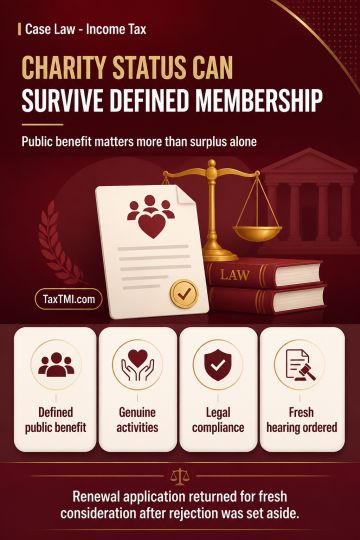
Defined public benefit can retain charitable character; registration renewal requires examining genuine activities and legal compliance, not surplus a...
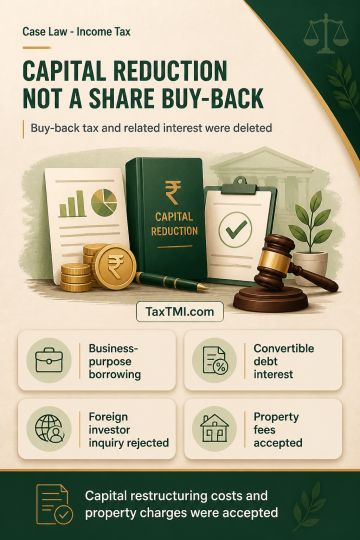
Capital reduction is distinct from share buy-back, preventing buy-back tax; restructuring interest and related business deductions also survive scruti...
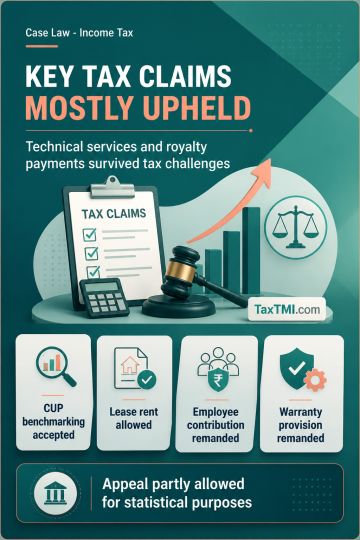
Transfer pricing and tax deductions upheld on established principles, while employee contributions and warranty provisions returned for fresh examinat...
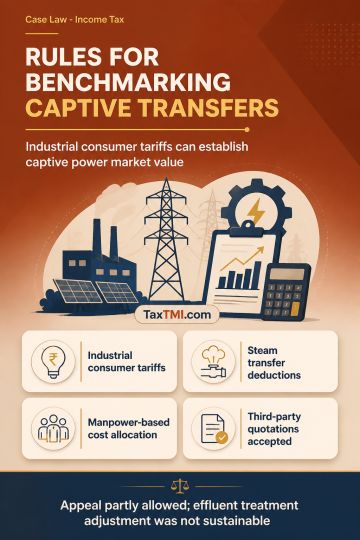
Captive transfer pricing relies on industrial consumer tariffs, while genuine quotations can benchmark effluent treatment transfers under the Other Me...
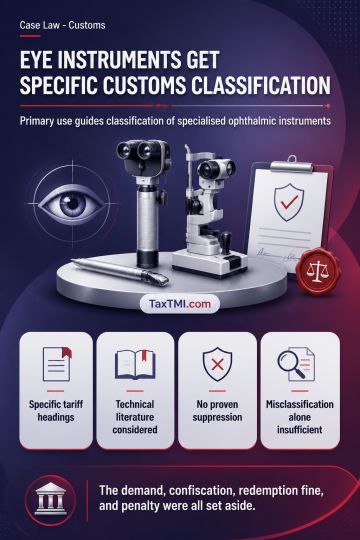
Specific tariff classification for ophthalmic instruments and extended limitation principles determine the treatment of duty demands, confiscation, an...
Integrated golf function determines classification, placing launch monitors and simulators under other golf equipment rather than measuring instrument...
Seeking vacation of the interim protection - constitutional validity of Sections 69 and 132 of the Central Goods and Services Tax Act, 2017 - case of petitioner is that the power to arrest and prosecute are not ancillary and/or incidental to the power to levy and collect goods and services tax - Even if Sections 69 and 132 of the Act could not have been enacted in pursuance to power under Article 246A, they could have been enacted under Entry 1 of List III, as laying down of a crime and providing for its punishment is ‘criminal law’. Consequently, this Court is of the prima facie view that in either option both Sections 69 and 132 of the Act are constitutional and fall within the legislative competence of Parliament. - HC
Seeking vacation of the interim protection - constitutional validity of Sections 69 and 132 of the Central Goods and Services Tax Act, 2017 - case of petitioner is that the power to arrest and prosecute are not ancillary and/or incidental to the power to levy and collect goods and services tax - Even if Sections 69 and 132 of the Act could not have been enacted in pursuance to power under Article 246A, they could have been enacted under Entry 1 of List III, as laying down of a crime and providing for its punishment is ‘criminal law’. Consequently, this Court is of the prima facie view that in either option both Sections 69 and 132 of the Act are constitutional and fall within the legislative competence of Parliament. - HC
Note: It is a system-generated summary and is for quick reference only.
 TaxTMI
 of 4794





 Join Channel


 TaxTMI
