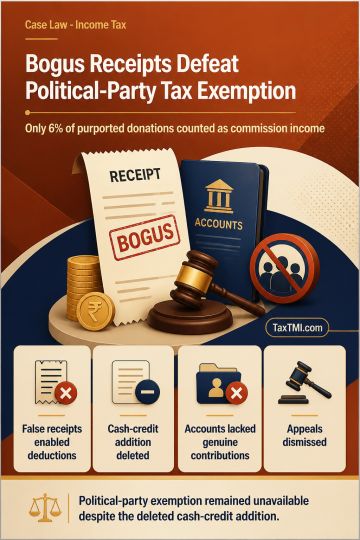
Bogus donation receipts justified commission income assessment and defeated political-party tax exemption for inaccurate accounts and reporting failur...
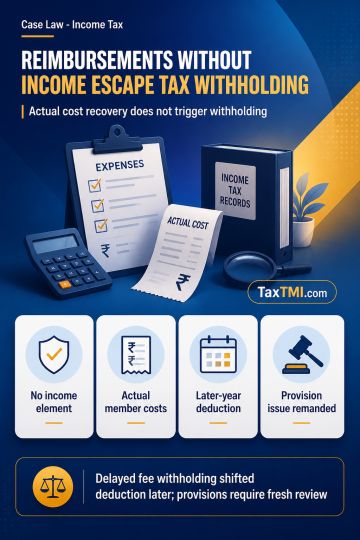
Pure reimbursement without income element escapes tax withholding, while delayed withholding and unsupported provisions face deferred or renewed scrut...
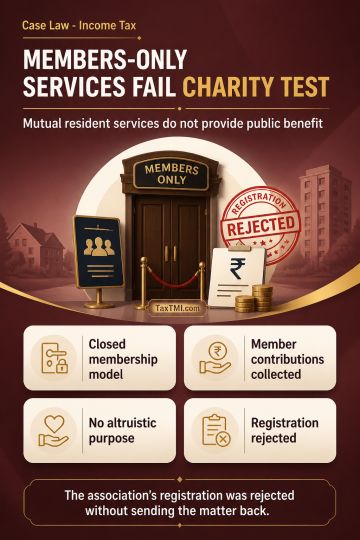
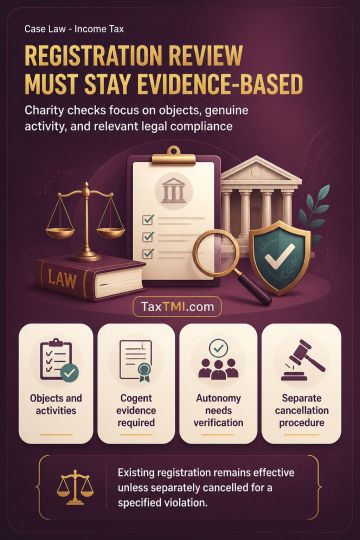
Public benefit requirement defeats charitable registration where residents' association services are reciprocal, member-only facilities governed by mu...
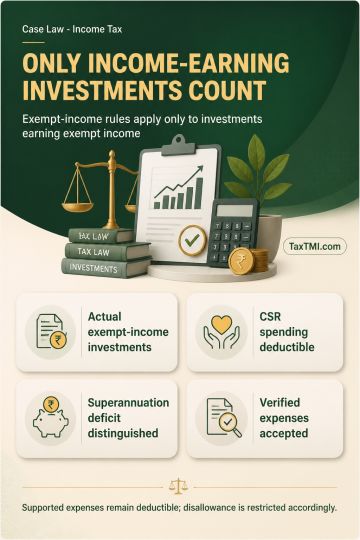
Exempt-income expenditure disallowance is confined to investments that actually generated exempt income, while supported business expenses remain dedu...
Objective characteristics and principal use govern mining-tyre classification, while fresh advance ruling applications may rely on additional technica...
Seeking vacation of the interim protection - constitutional validity of Sections 69 and 132 of the Central Goods and Services Tax Act, 2017 - case of petitioner is that the power to arrest and prosecute are not ancillary and/or incidental to the power to levy and collect goods and services tax - Even if Sections 69 and 132 of the Act could not have been enacted in pursuance to power under Article 246A, they could have been enacted under Entry 1 of List III, as laying down of a crime and providing for its punishment is ‘criminal law’. Consequently, this Court is of the prima facie view that in either option both Sections 69 and 132 of the Act are constitutional and fall within the legislative competence of Parliament. - HC
Seeking vacation of the interim protection - constitutional validity of Sections 69 and 132 of the Central Goods and Services Tax Act, 2017 - case of petitioner is that the power to arrest and prosecute are not ancillary and/or incidental to the power to levy and collect goods and services tax - Even if Sections 69 and 132 of the Act could not have been enacted in pursuance to power under Article 246A, they could have been enacted under Entry 1 of List III, as laying down of a crime and providing for its punishment is ‘criminal law’. Consequently, this Court is of the prima facie view that in either option both Sections 69 and 132 of the Act are constitutional and fall within the legislative competence of Parliament. - HC
Note: It is a system-generated summary and is for quick reference only.
 TaxTMI
 of 4788




 Join Channel


 TaxTMI