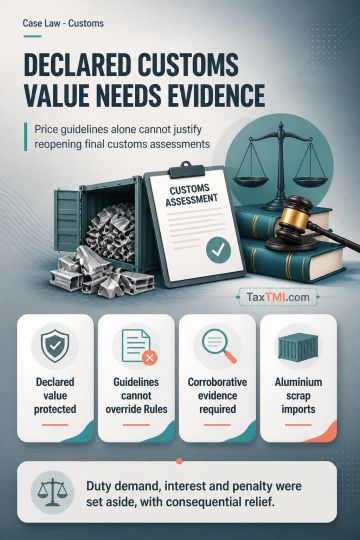
Transaction value cannot be rejected solely on non-statutory valuation guidelines without corroborative evidence supporting reassessment of final cust...
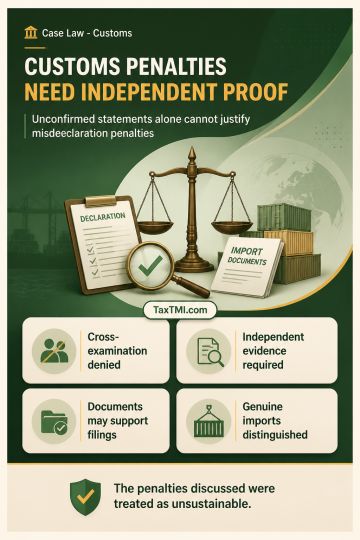
Cross-examination rights and corroborated evidence limit customs penalties for misdeclaration in genuine import transactions involving documented clea...
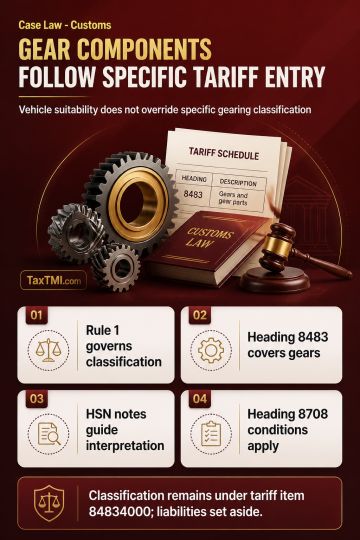
Tariff classification of vehicle gear components follows the specific gearing entry, displacing motor-vehicle parts classification and related liabili...
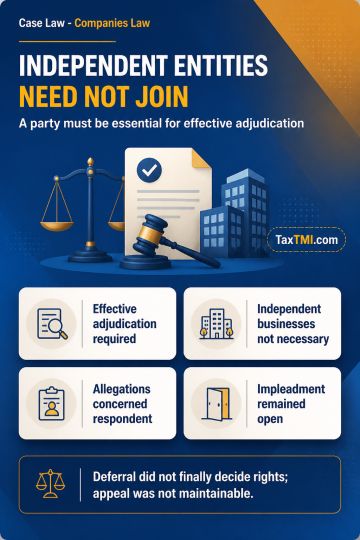
Necessary-party requirements limit impleadment of independent entities, while deferred consideration does not create an appealable adverse determinati...
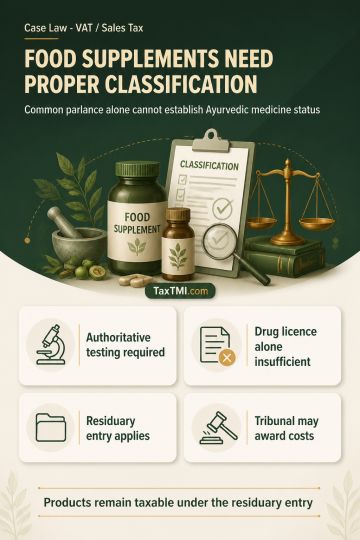
Food supplement classification requires common parlance and authoritative tests, preventing treatment as proprietary Ayurvedic medicines without suppo...
Page of 4787
Press 'Enter' after typing page number.
401 to 420 of 95724 Results
❮
❯
❯❯
0 / 200
Expand Note
Add to Folder
No Folders have been created
+
Are you sure you want to delete "My most important" ?
Seeking vacation of the interim protection - constitutional validity of Sections 69 and 132 of the Central Goods and Services Tax Act, 2017 - case of petitioner is that the power to arrest and prosecute are not ancillary and/or incidental to the power to levy and collect goods and services tax - Even if Sections 69 and 132 of the Act could not have been enacted in pursuance to power under Article 246A, they could have been enacted under Entry 1 of List III, as laying down of a crime and providing for its punishment is ‘criminal law’. Consequently, this Court is of the prima facie view that in either option both Sections 69 and 132 of the Act are constitutional and fall within the legislative competence of Parliament. - HC
Seeking vacation of the interim protection - constitutional validity of Sections 69 and 132 of the Central Goods and Services Tax Act, 2017 - case of petitioner is that the power to arrest and prosecute are not ancillary and/or incidental to the power to levy and collect goods and services tax - Even if Sections 69 and 132 of the Act could not have been enacted in pursuance to power under Article 246A, they could have been enacted under Entry 1 of List III, as laying down of a crime and providing for its punishment is ‘criminal law’. Consequently, this Court is of the prima facie view that in either option both Sections 69 and 132 of the Act are constitutional and fall within the legislative competence of Parliament. - HC
Note: It is a system-generated summary and is for quick reference only.
 TaxTMI
 of 4787



 Join Channel


 TaxTMI