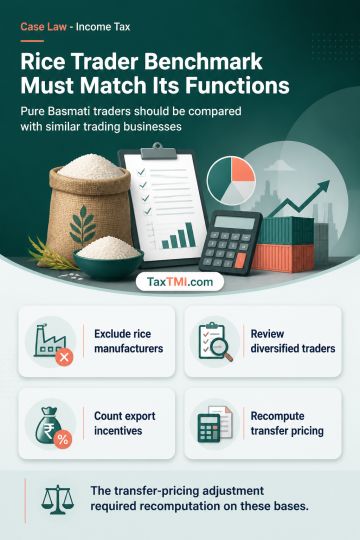
TNMM functional comparability requires excluding rice manufacturers from a pure Basmati rice trader's benchmark and recognising operating export recei...
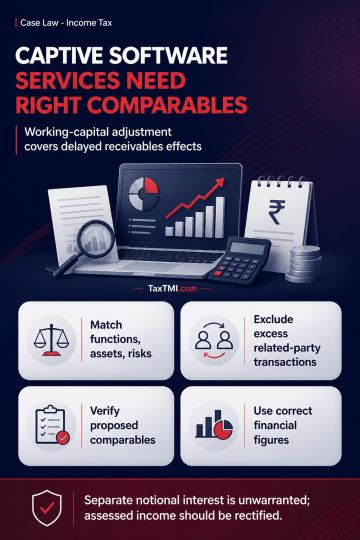
Working-capital adjustment subsumes delayed-receivable effects in TNMM benchmarking of captive software-development services, avoiding separate notion...
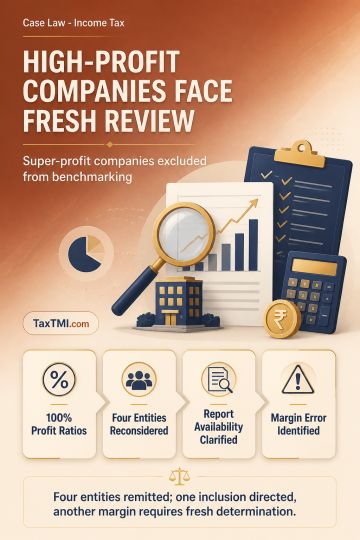
Transfer-pricing comparability requires exclusion of financially illogical super-profit comparables and correction of unsupported annual-report and ma...
Charitable character assessment preserves Section 80G approval despite inclusive spiritual teachings and incidental religious expenditure within the s...
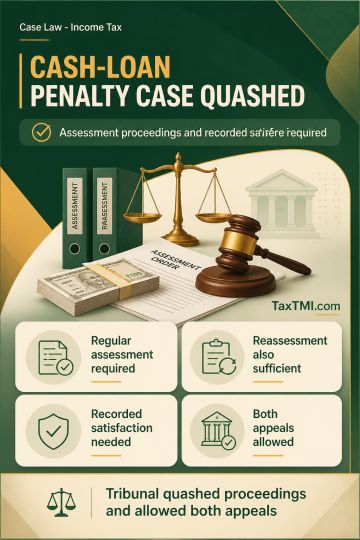
Penalty proceedings for cash-loan acceptance require assessment proceedings and recorded Assessing Officer satisfaction; absent these, the proceedings...
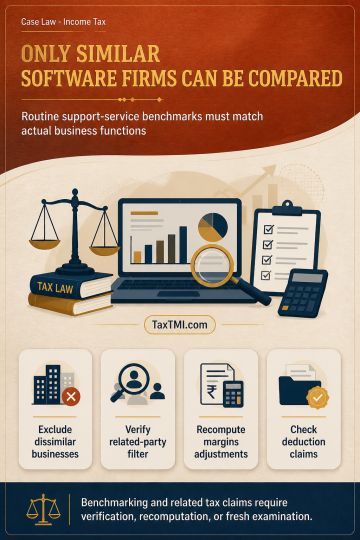
Functional comparability governs software-service benchmarking: dissimilar companies are excluded, while related-party filters, margins and working-ca...
Tribunal - it is crucial that these tribunals are run by a robust mix of experts, i.e. those with experience in policy in the relevant field, and those with judicial or legal experience and competence in such fields. The functioning or non-functioning of any of these tribunals due to lack of competence or understanding has a direct adverse impact on those who expect effective and swift justice from them. The resultant fallout is invariably an increased docket load, especially by recourse to Article 226 of the Constitution of India. These aspects are highlighted once again to stress that these tribunals do not function in isolation, but are a part of the larger scheme of justice dispensation envisioned by the Constitution and have to function independently, and effectively, to live up to their mandate. - - SC
Tribunal - it is crucial that these tribunals are run by a robust mix of experts, i.e. those with experience in policy in the relevant field, and those with judicial or legal experience and competence in such fields. The functioning or non-functioning of any of these tribunals due to lack of competence or understanding has a direct adverse impact on those who expect effective and swift justice from them. The resultant fallout is invariably an increased docket load, especially by recourse to Article 226 of the Constitution of India. These aspects are highlighted once again to stress that these tribunals do not function in isolation, but are a part of the larger scheme of justice dispensation envisioned by the Constitution and have to function independently, and effectively, to live up to their mandate. - - SC
Note: It is a system-generated summary and is for quick reference only.
 TaxTMI
  TaxTMI
 of 4830








 Join Channel


