Prolonged sterilisation of development rights supports capital-gains treatment, while business-income disallowances cannot govern capital-gains comput...
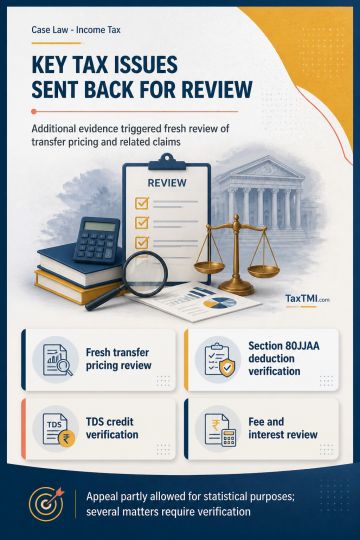
Additional evidence in transfer pricing dispute leads to fresh examination, while tax deductions, TDS credit, fee and refund interest require verifica...
Category II AIF pass-through taxation preserves non-business income character; investment receipts cannot be reclassified without applying recognised ...
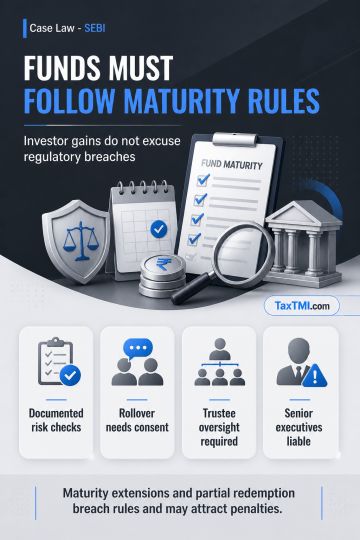
Mutual fund maturity rules require proper rollover, redemption, disclosure, and due diligence; investor gains cannot excuse regulatory breaches or pen...
Threshold exemption excludes exempt services, while stamp-paper purchases avoid reverse charge; consequential service tax penalties were also set asid...
The right of appeal is a substantive right of an aggrieved person. It is not a matter of procedure but is a vested right conferred by the statute. Being a statutory right, it can only be circumscribed by the conditions of the statute granting it. On the other hand, an additional remedy of making representation to the higher authority is provided under Regulation 14(2) of the Regulations, which as we have noted is a subordinate legislation. Such a remedy cannot supplant or curtail the remedy of appeal granted by the empowering statute; at best it can be construed as a supplementary remedy. - HC
The right of appeal is a substantive right of an aggrieved person. It is not a matter of procedure but is a vested right conferred by the statute. Being a statutory right, it can only be circumscribed by the conditions of the statute granting it. On the other hand, an additional remedy of making representation to the higher authority is provided under Regulation 14(2) of the Regulations, which as we have noted is a subordinate legislation. Such a remedy cannot supplant or curtail the remedy of appeal granted by the empowering statute; at best it can be construed as a supplementary remedy. - HC
Note: It is a system-generated summary and is for quick reference only.
 TaxTMI
 of 4792

















 Join Channel


 TaxTMI
