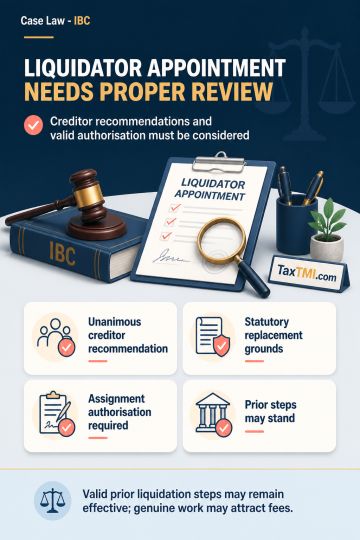
Liquidator appointment under Section 34 requires consideration of creditor recommendations, valid professional authorisation, and preservation of vali...
Income-tax exemption for specified regulatory fees and government grants applies subject to non-commercial activity and continuing compliance conditio...
Digital accessibility audit and remediation deadlines extended, while all other disability-compliance obligations for regulated entities remain unchan...
Insolvency and BankruptcySeptember 22, 2020Case LawsTri
Rule of IRP - A well functioning system of resolution driven by the IPs enables the adjudicator to delegate more and more powers and duties to the professionals. This creates the positive externality of better utilization of judicial time. The worse the performance of IPs, the more the adjudicator may need to personally supervise the process, which in turn may cause inordinate delays. Consumers in a well functioning market for IPs are likely to have greater trust in the overall insolvency resolution system. On the other hand, poor quality, services and recurring instances of malpractice and fraud, erode consumer trust. - Tri
Rule of IRP - A well functioning system of resolution driven by the IPs enables the adjudicator to delegate more and more powers and duties to the professionals. This creates the positive externality of better utilization of judicial time. The worse the performance of IPs, the more the adjudicator may need to personally supervise the process, which in turn may cause inordinate delays. Consumers in a well functioning market for IPs are likely to have greater trust in the overall insolvency resolution system. On the other hand, poor quality, services and recurring instances of malpractice and fraud, erode consumer trust. - Tri
Note: It is a system-generated summary and is for quick reference only.
 TaxTMI
 of 4800

















 Join Channel


 TaxTMI
