TNMM functional comparability requires excluding rice manufacturers from a pure Basmati rice trader's benchmark and recognising operating export recei...
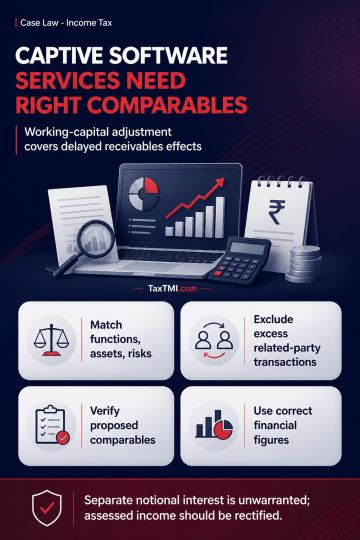
Working-capital adjustment subsumes delayed-receivable effects in TNMM benchmarking of captive software-development services, avoiding separate notion...
Transfer-pricing comparability requires exclusion of financially illogical super-profit comparables and correction of unsupported annual-report and ma...
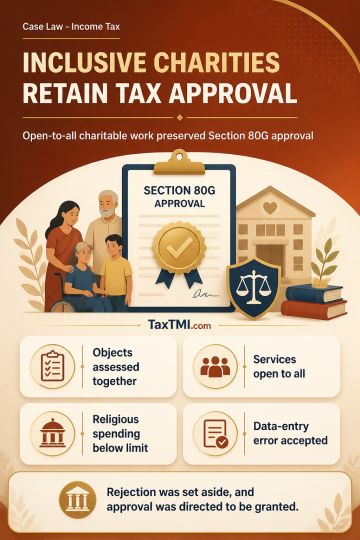
Charitable character assessment preserves Section 80G approval despite inclusive spiritual teachings and incidental religious expenditure within the s...
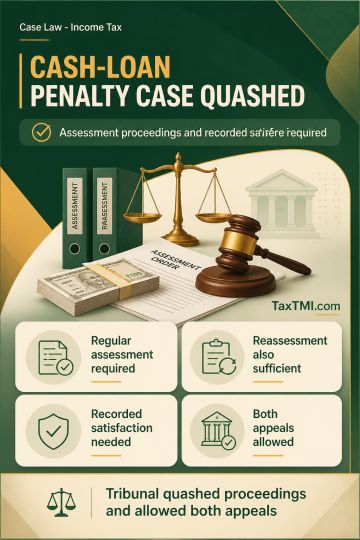
Penalty proceedings for cash-loan acceptance require assessment proceedings and recorded Assessing Officer satisfaction; absent these, the proceedings...
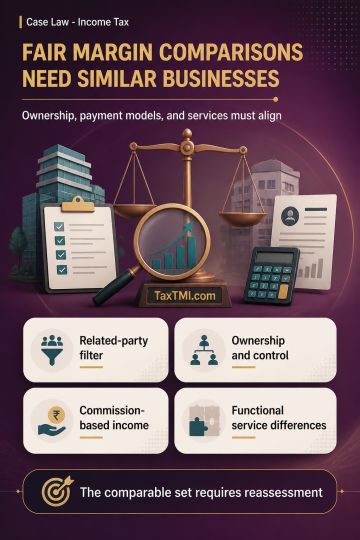
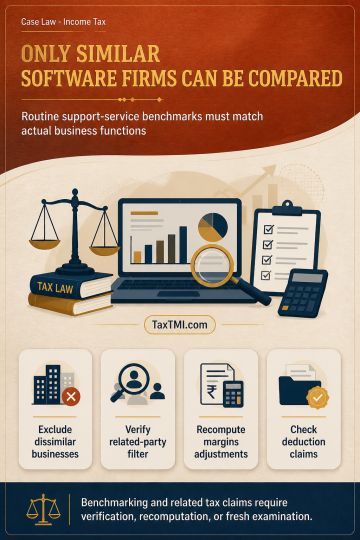
Functional comparability governs software-service benchmarking: dissimilar companies are excluded, while related-party filters, margins and working-ca...
Language employed in Section 36(1)(viia) of the Act is clear and unambiguous. It is well established Rule of interpretation stated by LORD CAIRNS that “if the person sought to be taxed comes within the letter of the law he must be taxed, however great the hardship may appear to the judicial mind to be. On the other hand, if the Crown seeking to recover the tax, cannot bring the subject within the letter of the law, the subject is free, however apparently within the spirit of law the case might otherwise appear to be. It is equally well settled legal proposition that “in a taxing act once has to look merely as what is said. There is no room for any intendment. There is no equity about a tax. There is no presumption as to tax. Nothing is to be read in, nothing is to be implied. One can only look fairly at the language used.” - HC
Language employed in Section 36(1)(viia) of the Act is clear and unambiguous. It is well established Rule of interpretation stated by LORD CAIRNS that “if the person sought to be taxed comes within the letter of the law he must be taxed, however great the hardship may appear to the judicial mind to be. On the other hand, if the Crown seeking to recover the tax, cannot bring the subject within the letter of the law, the subject is free, however apparently within the spirit of law the case might otherwise appear to be. It is equally well settled legal proposition that “in a taxing act once has to look merely as what is said. There is no room for any intendment. There is no equity about a tax. There is no presumption as to tax. Nothing is to be read in, nothing is to be implied. One can only look fairly at the language used.” - HC
Note: It is a system-generated summary and is for quick reference only.
 TaxTMI
  TaxTMI
 of 4830









 Join Channel


