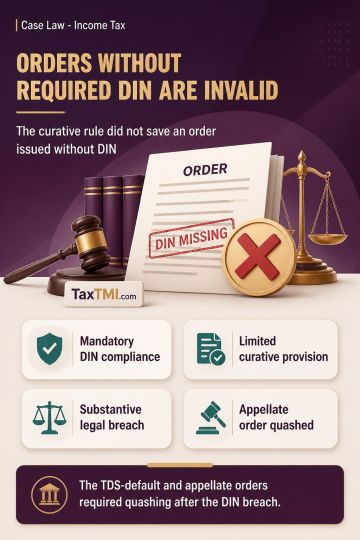
Document Identification Number compliance renders TDS-default orders invalid where mandatory DIN requirements are breached and curative provision does...
Insolvency and BankruptcySeptember 2, 2019Case LawsTri
RERA and IBC work in two different fields, while the former has been enacted with a view to regulate and promote the real estate sector while ensuring the protection of consumer interest; the latter seeks to consolidate the law relating to insolvency and bankruptcy and ensure resolution of insolvency of corporate persons, firms and individuals in a time bound manner. Thus, there is no question of a conflict between the two enactments and both will have an overriding effect in the fields exclusively assigned to them.
RERA and IBC work in two different fields, while the former has been enacted with a view to regulate and promote the real estate sector while ensuring the protection of consumer interest; the latter seeks to consolidate the law relating to insolvency and bankruptcy and ensure resolution of insolvency of corporate persons, firms and individuals in a time bound manner. Thus, there is no question of a conflict between the two enactments and both will have an overriding effect in the fields exclusively assigned to them.
Note: It is a system-generated summary and is for quick reference only.
 TaxTMI
  TaxTMI
 of 4918