Charitable trust registration requires a specified-violation notice; settled cash deposits and related-party payments did not justify cancellation or ...
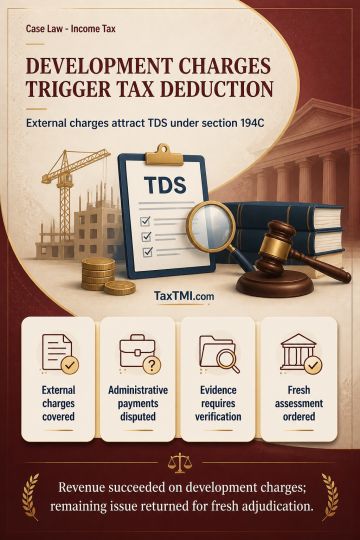
External development charges trigger TDS under section 194C, while disputed administrative payments require factual verification and fresh adjudicatio...
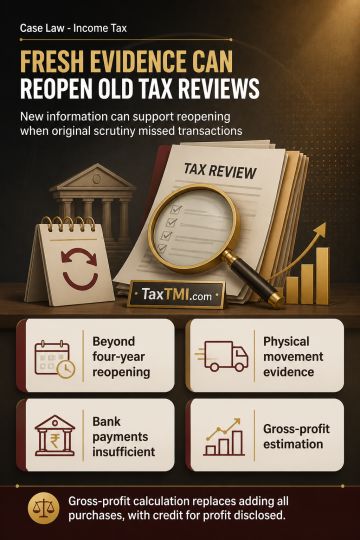
Section 270AA penalty immunity requires identified statutory defaults and a hearing before rejection; reassessment disclosure may constitute under-rep...
Expenditure on an abandoned towel-manufacturing expansion within an existing textile business was deductible as revenue expenditure because no completed capital asset or enduring advantage arose. Its initial classification as capital work-in-progress did not determine its character, which depended on its purpose and business context. The matching principle could not restrict a statutory deduction or compel spreading of expenditure; it applies only where the taxpayer elects to spread costs and the relevant conditions are met. The write-off was allowable in the relevant year, and the disallowance was deleted.
Expenditure on an abandoned towel-manufacturing expansion within an existing textile business was deductible as revenue expenditure because no completed capital asset or enduring advantage arose. Its initial classification as capital work-in-progress did not determine its character, which depended on its purpose and business context. The matching principle could not restrict a statutory deduction or compel spreading of expenditure; it applies only where the taxpayer elects to spread costs and the relevant conditions are met. The write-off was allowable in the relevant year, and the disallowance was deleted.
Note: It is a system-generated summary and is for quick reference only.
 TaxTMI
  TaxTMI
 of 4826

















 Join Channel