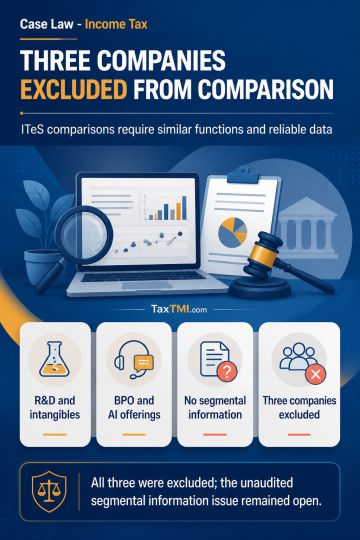
Functional comparability under TNMM supported exclusion of ITeS comparables with R&D, intangibles, diversified operations, or unavailable segmental da...
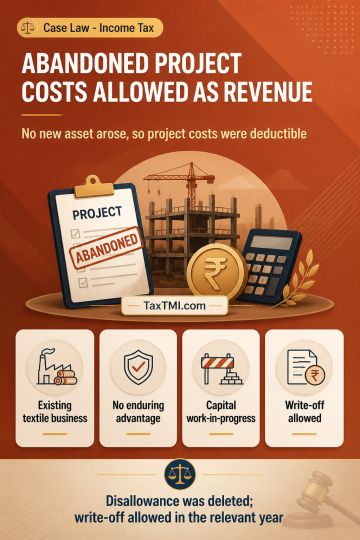
Expenditure on an abandoned towel-manufacturing expansion within an existing textile business was deductible as revenue expenditure because no completed capital asset or enduring advantage arose. Its initial classification as capital work-in-progress did not determine its character, which depended on its purpose and business context. The matching principle could not restrict a statutory deduction or compel spreading of expenditure; it applies only where the taxpayer elects to spread costs and the relevant conditions are met. The write-off was allowable in the relevant year, and the disallowance was deleted.
Expenditure on an abandoned towel-manufacturing expansion within an existing textile business was deductible as revenue expenditure because no completed capital asset or enduring advantage arose. Its initial classification as capital work-in-progress did not determine its character, which depended on its purpose and business context. The matching principle could not restrict a statutory deduction or compel spreading of expenditure; it applies only where the taxpayer elects to spread costs and the relevant conditions are met. The write-off was allowable in the relevant year, and the disallowance was deleted.
Note: It is a system-generated summary and is for quick reference only.
 TaxTMI
  TaxTMI
 of 4827






 Join Channel