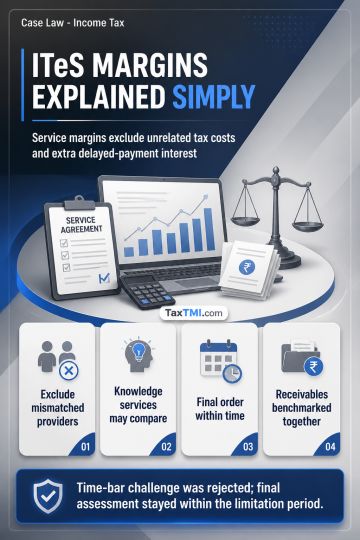
Transfer-pricing treatment of ITeS margins excludes pass-through tax recoveries and separate delayed-receivables interest after working-capital adjust...
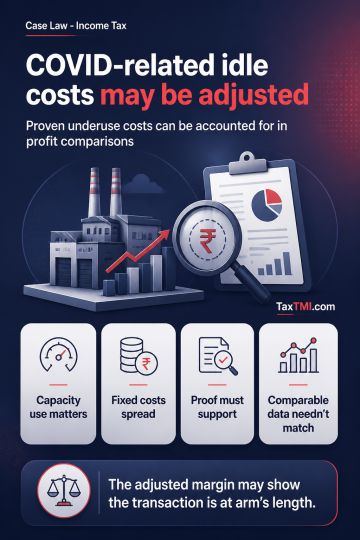
Capacity-utilisation adjustments under TNMM can neutralise substantiated COVID-related idle costs where underutilisation materially affects profitabil...
TNMM functional comparability requires excluding rice manufacturers from a pure Basmati rice trader's benchmark and recognising operating export recei...
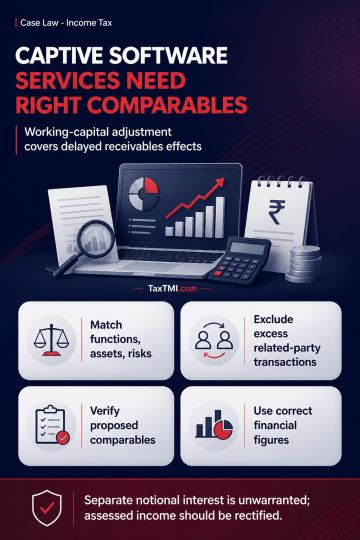
Working-capital adjustment subsumes delayed-receivable effects in TNMM benchmarking of captive software-development services, avoiding separate notion...
Transfer-pricing comparability requires exclusion of financially illogical super-profit comparables and correction of unsupported annual-report and ma...
Charitable character assessment preserves Section 80G approval despite inclusive spiritual teachings and incidental religious expenditure within the s...
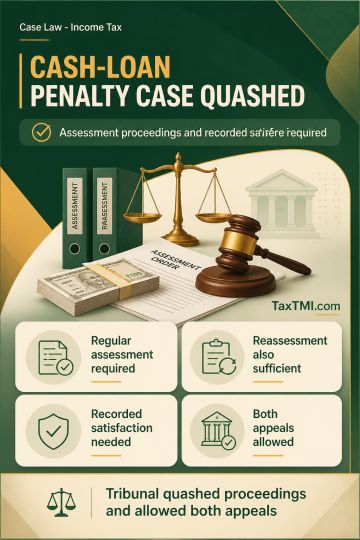
Penalty proceedings for cash-loan acceptance require assessment proceedings and recorded Assessing Officer satisfaction; absent these, the proceedings...
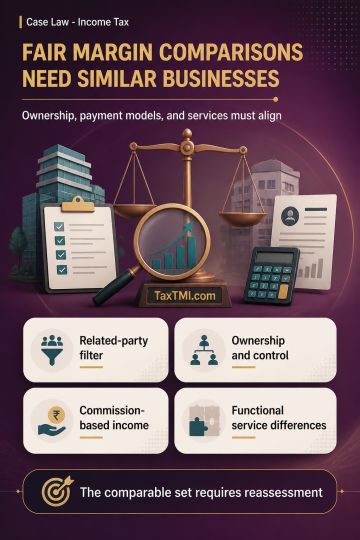
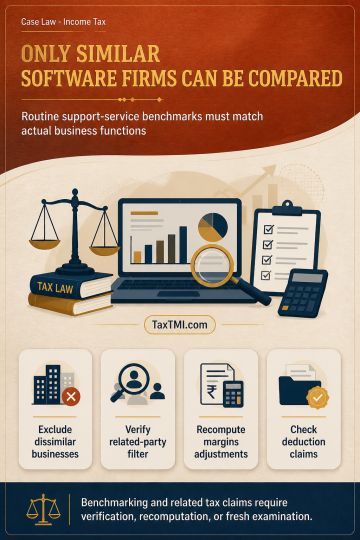
Functional comparability governs software-service benchmarking: dissimilar companies are excluded, while related-party filters, margins and working-ca...
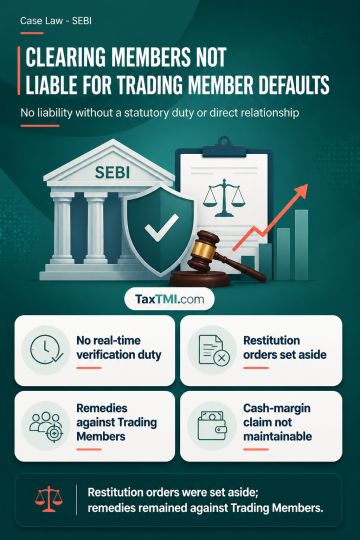
Professional Clearing Members had no statutory duty or real-time regulatory visibility to verify individual Trading Member clients' debit and credit positions before collateral liquidation; the applicable framework treated the Trading Member as their constituent and restricted cross-use of margin only between Trading Members. No regulatory breach was established. Clearing committees could not order restitution of liquidated securities or block equivalent collateral, because stock-exchange bye-laws excluded monetary penalties and no substantive statutory power supported those measures. Individual clients had no claim against Professional Clearing Members for Trading Members' defaults under illegal assured-return schemes, absent privity or regulatory breach; remedies remained against Trading Members. Restitution orders were set aside, while the investor's cash-margin claim was not maintainable.
Professional Clearing Members had no statutory duty or real-time regulatory visibility to verify individual Trading Member clients' debit and credit positions before collateral liquidation; the applicable framework treated the Trading Member as their constituent and restricted cross-use of margin only between Trading Members. No regulatory breach was established. Clearing committees could not order restitution of liquidated securities or block equivalent collateral, because stock-exchange bye-laws excluded monetary penalties and no substantive statutory power supported those measures. Individual clients had no claim against Professional Clearing Members for Trading Members' defaults under illegal assured-return schemes, absent privity or regulatory breach; remedies remained against Trading Members. Restitution orders were set aside, while the investor's cash-margin claim was not maintainable.
Note: It is a system-generated summary and is for quick reference only.
 TaxTMI
  TaxTMI
 of 4826










 Join Channel