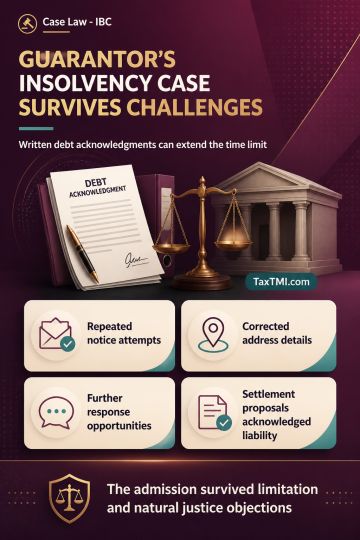
Service of notice and contractual debt acknowledgment preserved insolvency admission against a corporate guarantor despite limitation and natural just...
Original works exemption excludes standalone boulder transportation, leaving subcontracted railway-project transport services subject to service tax l...
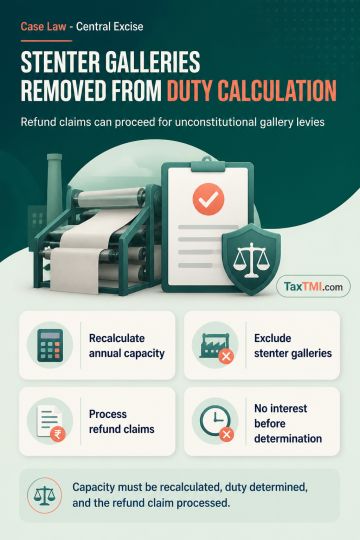
Annual production capacity determinations excluding stenter galleries support refunds for unconstitutional excise levies without an unjust-enrichment ...
Vicarious liability for cheque dishonour requires specific allegations of responsibility and cheque signatory; generic director allegations cannot sus...
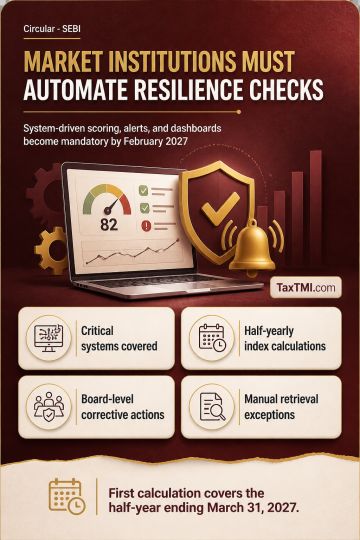
IT Resilience Index requires market infrastructure institutions to automate resilience scoring, early warnings, and continuous service-delivery monito...
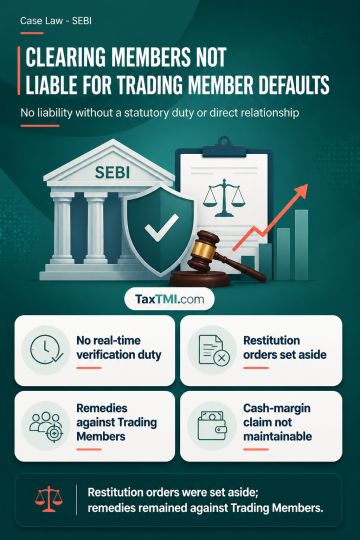
Professional Clearing Members had no statutory duty or real-time regulatory visibility to verify individual Trading Member clients' debit and credit positions before collateral liquidation; the applicable framework treated the Trading Member as their constituent and restricted cross-use of margin only between Trading Members. No regulatory breach was established. Clearing committees could not order restitution of liquidated securities or block equivalent collateral, because stock-exchange bye-laws excluded monetary penalties and no substantive statutory power supported those measures. Individual clients had no claim against Professional Clearing Members for Trading Members' defaults under illegal assured-return schemes, absent privity or regulatory breach; remedies remained against Trading Members. Restitution orders were set aside, while the investor's cash-margin claim was not maintainable.
Professional Clearing Members had no statutory duty or real-time regulatory visibility to verify individual Trading Member clients' debit and credit positions before collateral liquidation; the applicable framework treated the Trading Member as their constituent and restricted cross-use of margin only between Trading Members. No regulatory breach was established. Clearing committees could not order restitution of liquidated securities or block equivalent collateral, because stock-exchange bye-laws excluded monetary penalties and no substantive statutory power supported those measures. Individual clients had no claim against Professional Clearing Members for Trading Members' defaults under illegal assured-return schemes, absent privity or regulatory breach; remedies remained against Trading Members. Restitution orders were set aside, while the investor's cash-margin claim was not maintainable.
Note: It is a system-generated summary and is for quick reference only.
 TaxTMI
  TaxTMI
 of 4828








 Join Channel