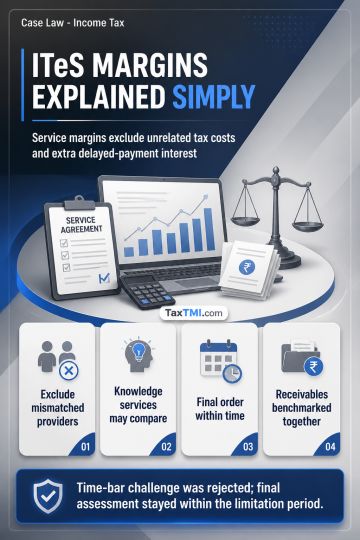
Transfer-pricing treatment of ITeS margins excludes pass-through tax recoveries and separate delayed-receivables interest after working-capital adjust...
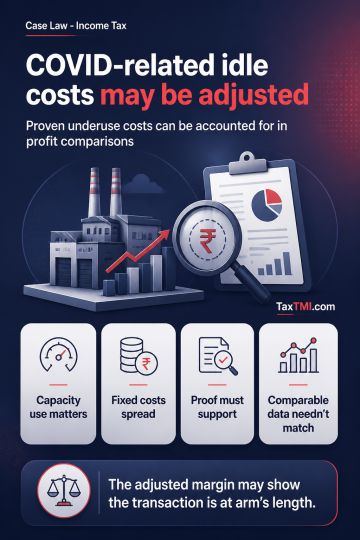
Capacity-utilisation adjustments under TNMM can neutralise substantiated COVID-related idle costs where underutilisation materially affects profitabil...
TNMM functional comparability requires excluding rice manufacturers from a pure Basmati rice trader's benchmark and recognising operating export recei...
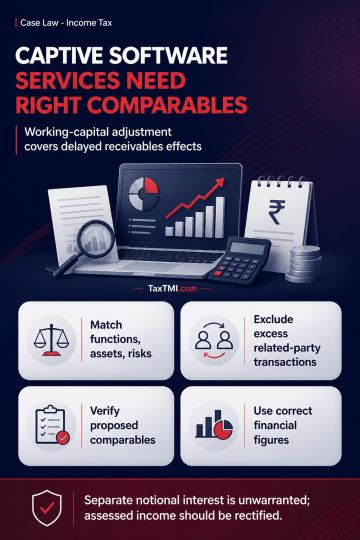
Working-capital adjustment subsumes delayed-receivable effects in TNMM benchmarking of captive software-development services, avoiding separate notion...
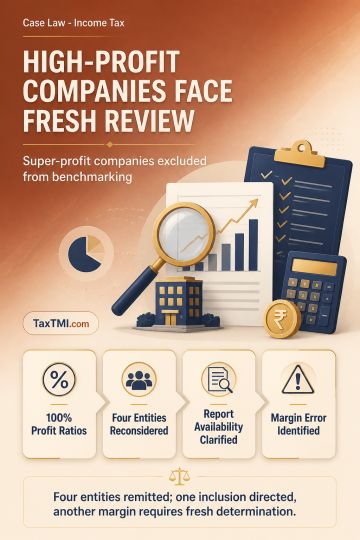
Transfer-pricing comparability requires exclusion of financially illogical super-profit comparables and correction of unsupported annual-report and ma...
Charitable character assessment preserves Section 80G approval despite inclusive spiritual teachings and incidental religious expenditure within the s...
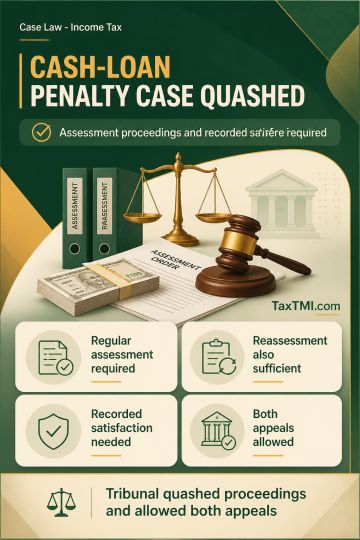
Penalty proceedings for cash-loan acceptance require assessment proceedings and recorded Assessing Officer satisfaction; absent these, the proceedings...
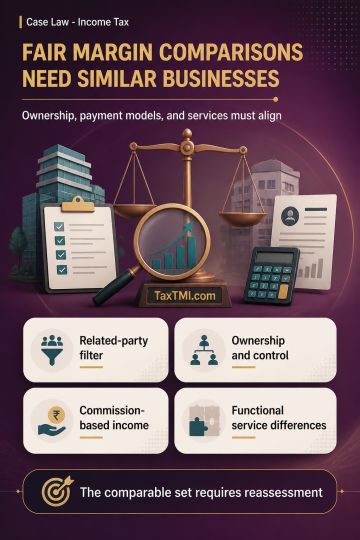
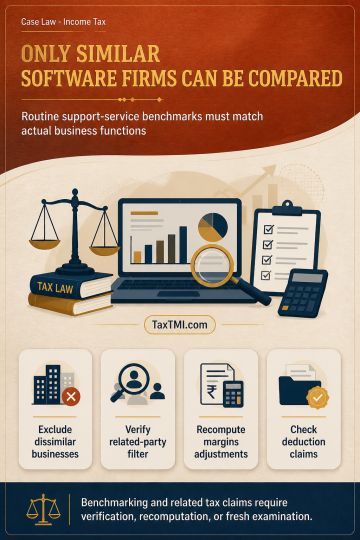
Functional comparability governs software-service benchmarking: dissimilar companies are excluded, while related-party filters, margins and working-ca...
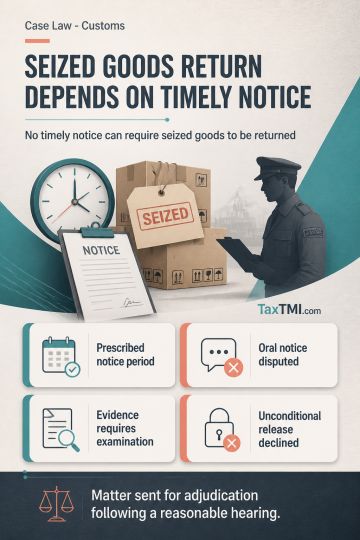
Statutory return of seized goods under Section 110(2) of the Customs Act arises where no notice is issued within the prescribed period or a validly extended period; continued retention is then impermissible. Compliance with Section 124 was disputed because the Department relied on contemporaneous proceedings as an oral show cause notice, while the affected parties challenged the documents' execution, explanation and voluntariness. Determining whether an oral notice satisfied statutory requirements required examination of statements and contemporaneous material, making writ jurisdiction unsuitable for resolving the factual dispute. Unconditional release was declined, with adjudication directed after a reasonable hearing.
Statutory return of seized goods under Section 110(2) of the Customs Act arises where no notice is issued within the prescribed period or a validly extended period; continued retention is then impermissible. Compliance with Section 124 was disputed because the Department relied on contemporaneous proceedings as an oral show cause notice, while the affected parties challenged the documents' execution, explanation and voluntariness. Determining whether an oral notice satisfied statutory requirements required examination of statements and contemporaneous material, making writ jurisdiction unsuitable for resolving the factual dispute. Unconditional release was declined, with adjudication directed after a reasonable hearing.
Note: It is a system-generated summary and is for quick reference only.
 TaxTMI
  TaxTMI
 of 4826







 Join Channel