Verification of intangible software expenditure and duplicated disallowances requires record-based reassessment before depreciation and income computa...
Cash receipt aggregation requires a single transaction, event or occasion; separate partner capital contributions cannot attract cash-receipt penaltie...
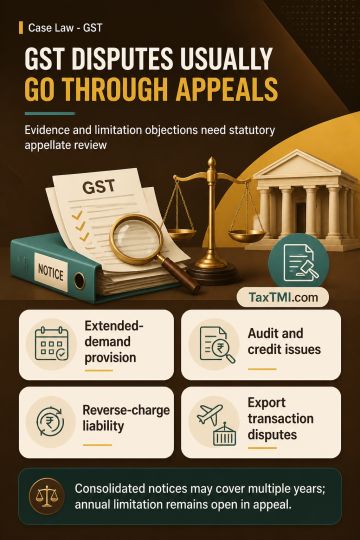
GST adjudication challenges involving the extended-demand provision, audit objections, input tax credit, reverse-charge liability, export transactions and factual demand heads require statutory appellate review where the taxpayer participated in proceedings and had an opportunity to present its defence. A disagreement over the evaluation of replies, documents or evidence differs from a denial of natural justice and does not by itself justify writ jurisdiction. A consolidated show cause notice may cover multiple financial years because the statutory language permits notices for periods, while limitation for the order is calculated by financial year. Limitation for an individual year remains available for determination in appeal. Writ interference is unavailable absent patent lack of jurisdiction or manifest breach of natural justice.
GST adjudication challenges involving the extended-demand provision, audit objections, input tax credit, reverse-charge liability, export transactions and factual demand heads require statutory appellate review where the taxpayer participated in proceedings and had an opportunity to present its defence. A disagreement over the evaluation of replies, documents or evidence differs from a denial of natural justice and does not by itself justify writ jurisdiction. A consolidated show cause notice may cover multiple financial years because the statutory language permits notices for periods, while limitation for the order is calculated by financial year. Limitation for an individual year remains available for determination in appeal. Writ interference is unavailable absent patent lack of jurisdiction or manifest breach of natural justice.
Note: It is a system-generated summary and is for quick reference only.
 TaxTMI
  TaxTMI
 of 4923