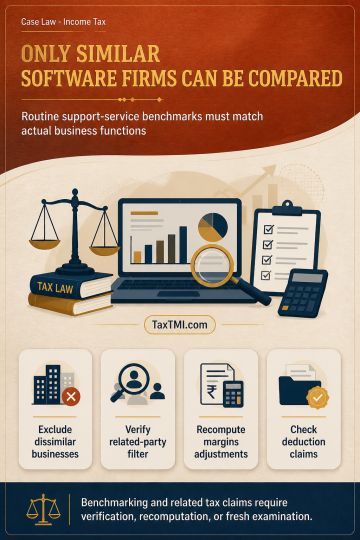
Functional comparability governs software-service benchmarking: dissimilar companies are excluded, while related-party filters, margins and working-ca...
Rule 26(3) requires electronic GST notices and orders to be authenticated by a digital signature certificate, e-signature or another notified mode; a system-generated reference number establishes issuance and tracking but does not replace authentication. Signature verifies origin, accountability and application of mind, so an unsigned notice or order is treated as non-existent in law. Portal upload under an additional-notices section, without other service, may deny an effective hearing where the taxpayer remains unaware and unrepresented. Such denial breaches natural justice and permits writ intervention despite an appellate remedy. Unsigned proceedings, consequential orders and recovery action may be set aside, with fresh action permissible after authenticated service and a meaningful hearing.
Rule 26(3) requires electronic GST notices and orders to be authenticated by a digital signature certificate, e-signature or another notified mode; a system-generated reference number establishes issuance and tracking but does not replace authentication. Signature verifies origin, accountability and application of mind, so an unsigned notice or order is treated as non-existent in law. Portal upload under an additional-notices section, without other service, may deny an effective hearing where the taxpayer remains unaware and unrepresented. Such denial breaches natural justice and permits writ intervention despite an appellate remedy. Unsigned proceedings, consequential orders and recovery action may be set aside, with fresh action permissible after authenticated service and a meaningful hearing.
Note: It is a system-generated summary and is for quick reference only.
 TaxTMI
  TaxTMI
 of 4823















 Join Channel