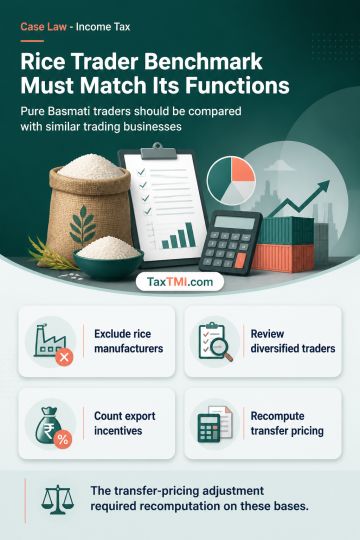
TNMM functional comparability requires excluding rice manufacturers from a pure Basmati rice trader's benchmark and recognising operating export recei...
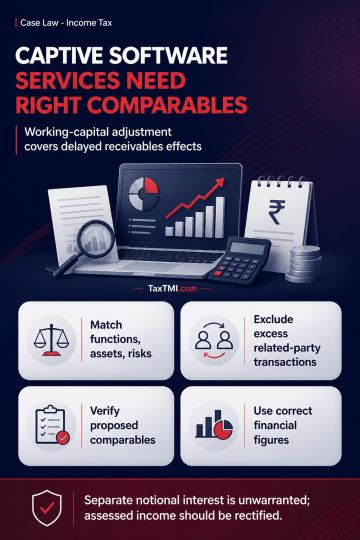
Working-capital adjustment subsumes delayed-receivable effects in TNMM benchmarking of captive software-development services, avoiding separate notion...
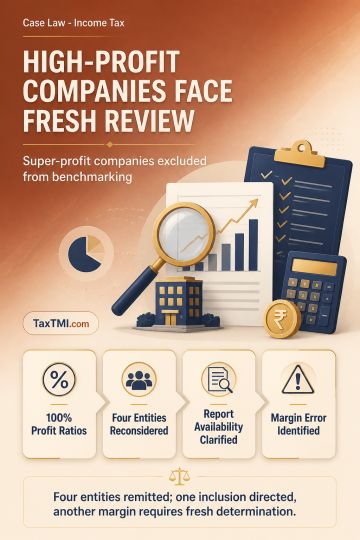
Transfer-pricing comparability requires exclusion of financially illogical super-profit comparables and correction of unsupported annual-report and ma...
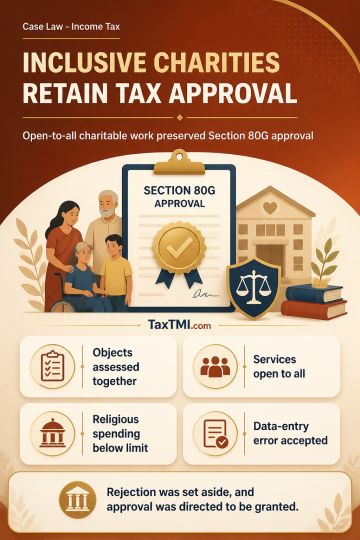
Charitable character assessment preserves Section 80G approval despite inclusive spiritual teachings and incidental religious expenditure within the s...
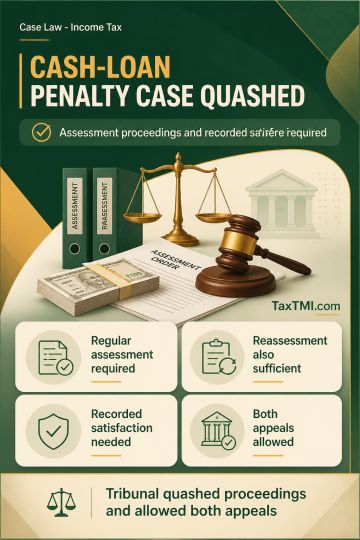
Penalty proceedings for cash-loan acceptance require assessment proceedings and recorded Assessing Officer satisfaction; absent these, the proceedings...
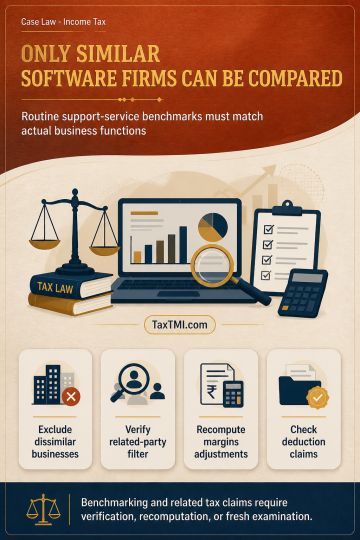
Functional comparability governs software-service benchmarking: dissimilar companies are excluded, while related-party filters, margins and working-ca...
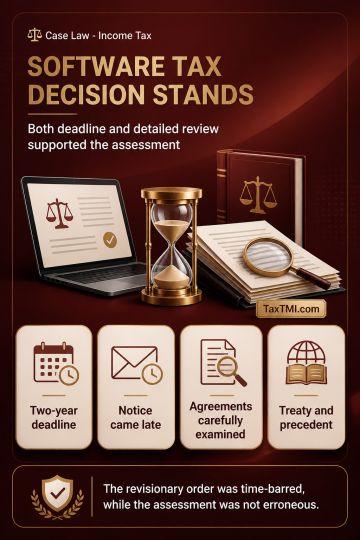
Revision under section 263 must be initiated within two years from the end of the financial year in which the assessment order was passed. The limitation expired before the first revisionary notice and order were issued, rendering the revisionary order time-barred and liable to be quashed. Independently, revision of the assessment treating integrated hardware systems with embedded software as non-royalty was unwarranted because the Assessing Officer had examined the agreements, copyright rights, software and services, and the India-United Kingdom tax treaty. Consistent earlier decisions and the Supreme Court's Engineering Analysis ruling supported the non-royalty treatment, so the assessment order was not erroneous or prejudicial to Revenue interests.
Revision under section 263 must be initiated within two years from the end of the financial year in which the assessment order was passed. The limitation expired before the first revisionary notice and order were issued, rendering the revisionary order time-barred and liable to be quashed. Independently, revision of the assessment treating integrated hardware systems with embedded software as non-royalty was unwarranted because the Assessing Officer had examined the agreements, copyright rights, software and services, and the India-United Kingdom tax treaty. Consistent earlier decisions and the Supreme Court's Engineering Analysis ruling supported the non-royalty treatment, so the assessment order was not erroneous or prejudicial to Revenue interests.
Note: It is a system-generated summary and is for quick reference only.
 TaxTMI
  TaxTMI
 of 4824






 Join Channel