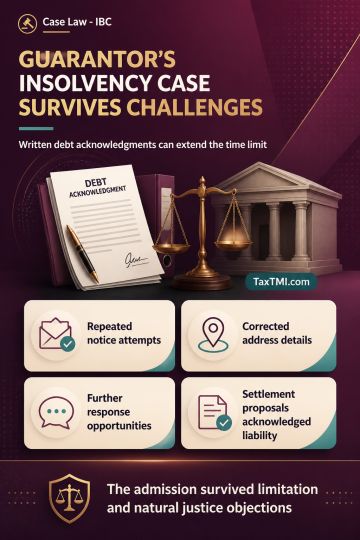
Service of notice and contractual debt acknowledgment preserved insolvency admission against a corporate guarantor despite limitation and natural just...
Original works exemption excludes standalone boulder transportation, leaving subcontracted railway-project transport services subject to service tax l...
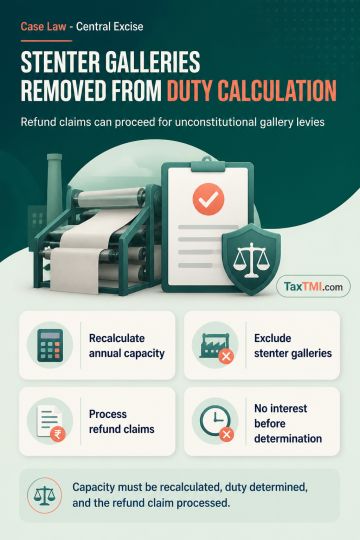
Annual production capacity determinations excluding stenter galleries support refunds for unconstitutional excise levies without an unjust-enrichment ...
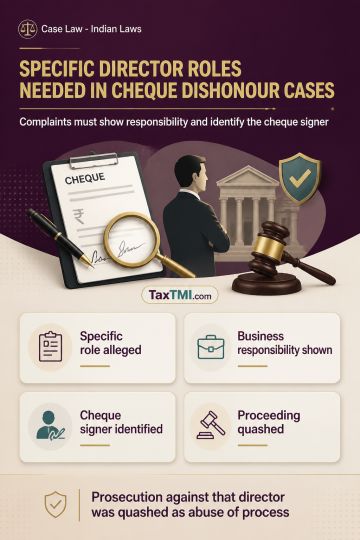
Vicarious liability for cheque dishonour requires specific allegations of responsibility and cheque signatory; generic director allegations cannot sus...
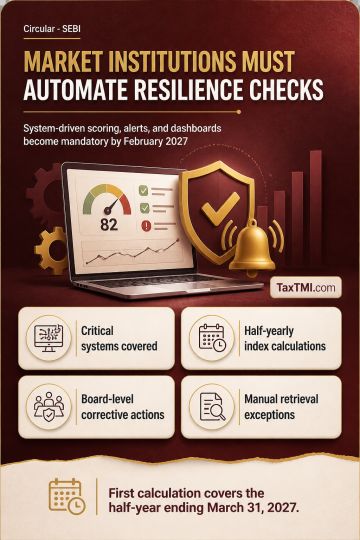
IT Resilience Index requires market infrastructure institutions to automate resilience scoring, early warnings, and continuous service-delivery monito...
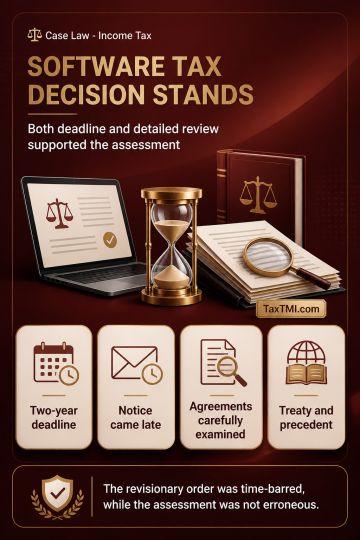
Revision under section 263 must be initiated within two years from the end of the financial year in which the assessment order was passed. The limitation expired before the first revisionary notice and order were issued, rendering the revisionary order time-barred and liable to be quashed. Independently, revision of the assessment treating integrated hardware systems with embedded software as non-royalty was unwarranted because the Assessing Officer had examined the agreements, copyright rights, software and services, and the India-United Kingdom tax treaty. Consistent earlier decisions and the Supreme Court's Engineering Analysis ruling supported the non-royalty treatment, so the assessment order was not erroneous or prejudicial to Revenue interests.
Revision under section 263 must be initiated within two years from the end of the financial year in which the assessment order was passed. The limitation expired before the first revisionary notice and order were issued, rendering the revisionary order time-barred and liable to be quashed. Independently, revision of the assessment treating integrated hardware systems with embedded software as non-royalty was unwarranted because the Assessing Officer had examined the agreements, copyright rights, software and services, and the India-United Kingdom tax treaty. Consistent earlier decisions and the Supreme Court's Engineering Analysis ruling supported the non-royalty treatment, so the assessment order was not erroneous or prejudicial to Revenue interests.
Note: It is a system-generated summary and is for quick reference only.
 TaxTMI
  TaxTMI
 of 4827








 Join Channel