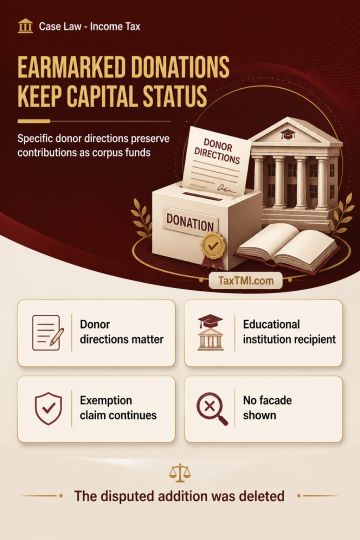
Donor-directed corpus contributions retain capital character despite exemption claims under section 10(23C)(vi), preventing their treatment as taxable...
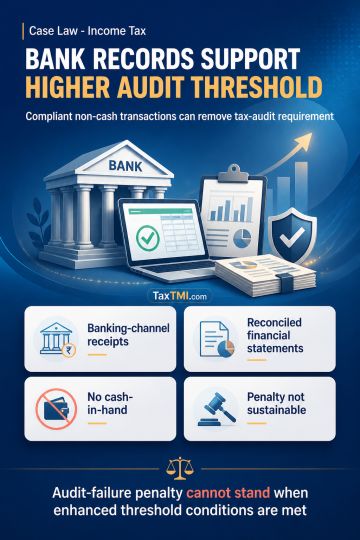
Enhanced tax-audit threshold applies where banking records establish compliant non-cash receipts and payments, eliminating penalty exposure for audit ...
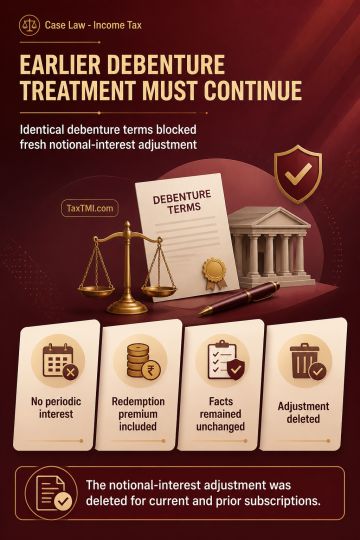
Transfer pricing consistency protects identical non-interest-bearing debenture terms from a later notional-interest adjustment without valid statutory...
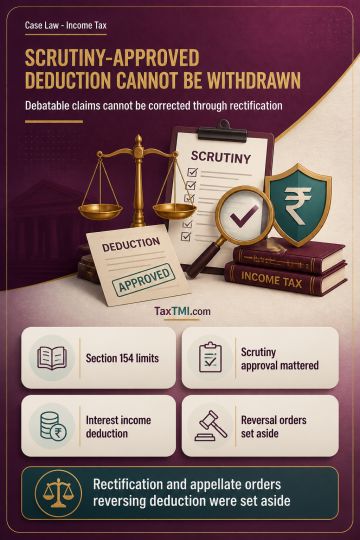
Rectification of debatable deduction claims cannot reverse scrutiny-approved co-operative society interest income deductions as apparent record errors...
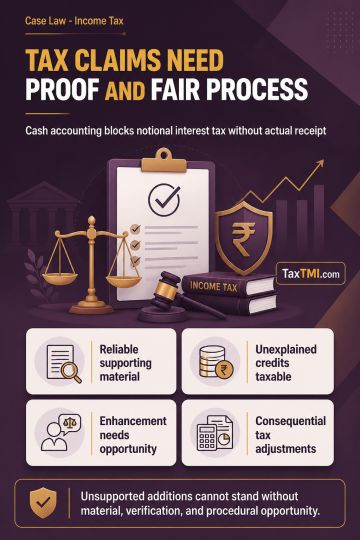
Cash-method accounting bars presumptive interest taxation, while unsupported securities and share-trading additions require reliable material and veri...
Section 80G approval turns on an institution's objects,...
Charitable character assessment preserves Section 80G approval despite inclusive spiritual teachings and incidental religious expenditure within the statutory limit.
Contents
Summary
Note
Bookmark
Share
✓ Copied successfully !
Print
Print Options
For full text, please login
Login to TaxTMI
Verification Pending
The Email Id has not been verified. Click on the link we have sent on
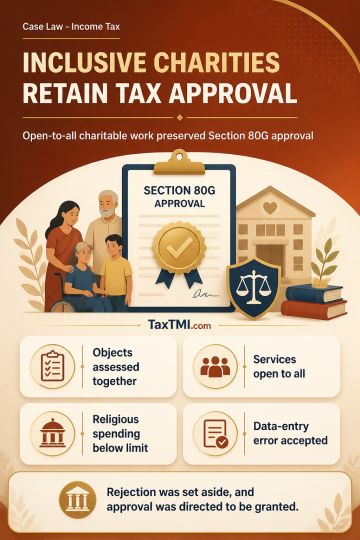
Section 80G approval turns on an institution's objects, beneficiaries and activities considered as a whole, rather than isolated spiritual or philosophical clauses. Disseminating Bhagavad Gita teachings alongside relief of poverty, medical relief, public welfare, libraries and reading rooms does not make a society wholly or substantially religious where membership and services are open to all communities. Religious-expenditure entries in Form 10AB that duplicated total audited expenditure, despite a declaration of no religious spending, were treated as an inadvertent data-entry error rather than a substantive admission. In any event, incidental religious expenditure below the five per cent statutory ceiling does not defeat eligibility. The rejection was set aside and approval was directed to be granted.
Section 80G approval turns on an institution's objects, beneficiaries and activities considered as a whole, rather than isolated spiritual or philosophical clauses. Disseminating Bhagavad Gita teachings alongside relief of poverty, medical relief, public welfare, libraries and reading rooms does not make a society wholly or substantially religious where membership and services are open to all communities. Religious-expenditure entries in Form 10AB that duplicated total audited expenditure, despite a declaration of no religious spending, were treated as an inadvertent data-entry error rather than a substantive admission. In any event, incidental religious expenditure below the five per cent statutory ceiling does not defeat eligibility. The rejection was set aside and approval was directed to be granted.
Note: It is a system-generated summary and is for quick reference only.
 TaxTMI
  TaxTMI
 of 4826












 Join Channel