Transaction value rejection requires reliable corroboration; refundable VAT is excluded and temporary registration does not defeat new-vehicle exempti...
Appellate jurisdiction remains available where a wrist-worn gold ornament cannot conclusively be characterised as imported baggage at the preliminary ...
Written complaint requirement bars cognizance on police reports for securities offences, while unsupported breach of trust and cheating allegations fa...
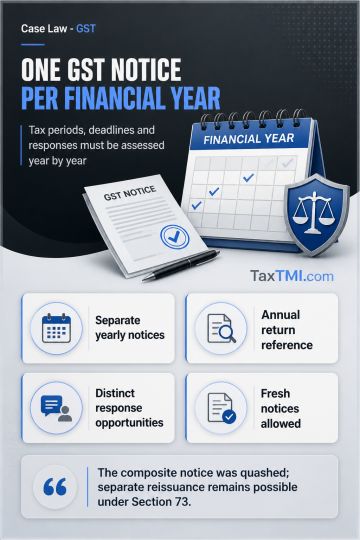
Section 73 of the CGST Act requires GST assessment and demand limitation to be determined separately for each financial year, with reference to the relevant annual return. A composite show cause notice covering multiple financial years improperly combines distinct tax periods, due dates, limitation periods, allegations and response opportunities. High Court precedent is binding within its territorial jurisdiction. The composite notice was quashed, while preserving the respondents' liberty to issue fresh notices separately in accordance with Section 73, subject to any other legal impediment.
Section 73 of the CGST Act requires GST assessment and demand limitation to be determined separately for each financial year, with reference to the relevant annual return. A composite show cause notice covering multiple financial years improperly combines distinct tax periods, due dates, limitation periods, allegations and response opportunities. High Court precedent is binding within its territorial jurisdiction. The composite notice was quashed, while preserving the respondents' liberty to issue fresh notices separately in accordance with Section 73, subject to any other legal impediment.
Note: It is a system-generated summary and is for quick reference only.
 TaxTMI
  TaxTMI
 of 4828
















 Join Channel