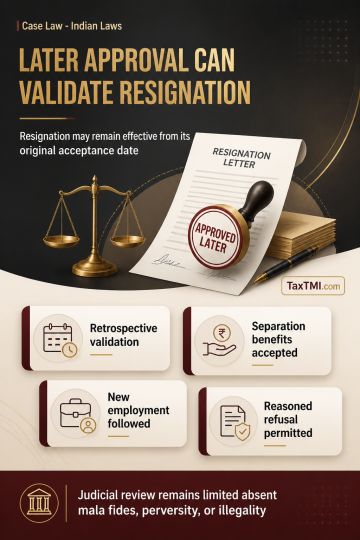
Ratification of resignation acceptance validates separation retrospectively, while withdrawal may be refused through reasoned administrative discretio...
Nature-dependent electricity contracts receive new Ind AS accounting, hedge designation, transition and financial-statement disclosure requirements fr...
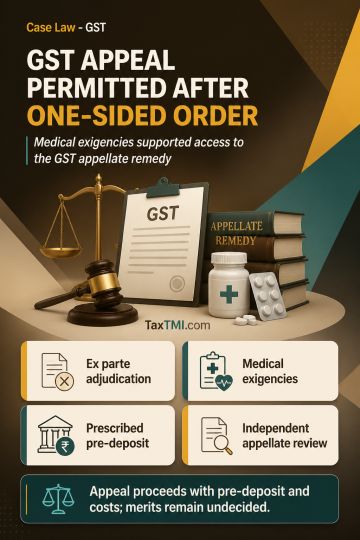
Alternative GST remedy permitted protective writ intervention for ex parte adjudication, preserving independent appellate review of input tax credit d...
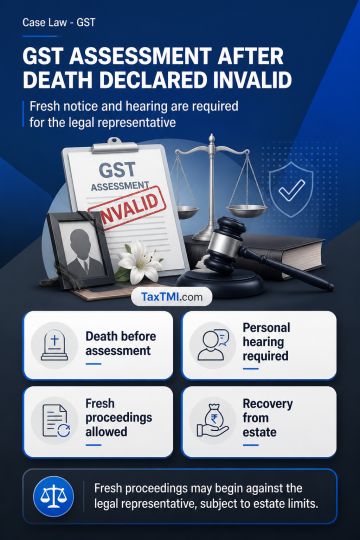
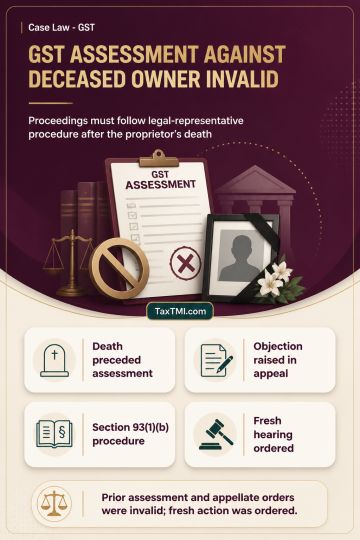
Assessment against deceased sole proprietor requires proceedings against the legal representative, rendering prior assessment and appellate orders inv...
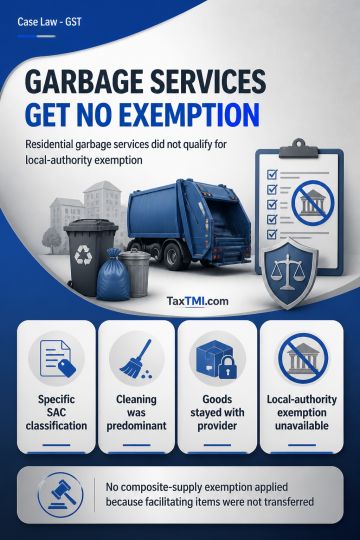
Residential waste collection classification under SAC 999423 defeats composite-supply exemption where facilitating goods are not transferred to the lo...
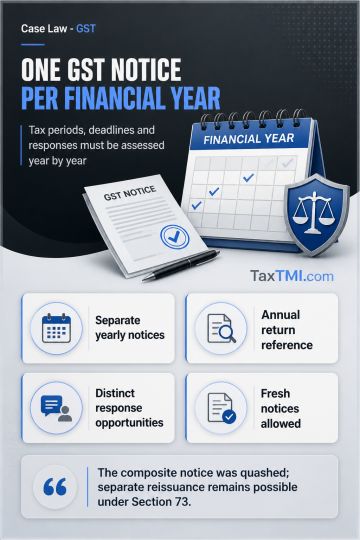
Section 73 of the CGST Act requires GST assessment and demand limitation to be determined separately for each financial year, with reference to the relevant annual return. A composite show cause notice covering multiple financial years improperly combines distinct tax periods, due dates, limitation periods, allegations and response opportunities. High Court precedent is binding within its territorial jurisdiction. The composite notice was quashed, while preserving the respondents' liberty to issue fresh notices separately in accordance with Section 73, subject to any other legal impediment.
Section 73 of the CGST Act requires GST assessment and demand limitation to be determined separately for each financial year, with reference to the relevant annual return. A composite show cause notice covering multiple financial years improperly combines distinct tax periods, due dates, limitation periods, allegations and response opportunities. High Court precedent is binding within its territorial jurisdiction. The composite notice was quashed, while preserving the respondents' liberty to issue fresh notices separately in accordance with Section 73, subject to any other legal impediment.
Note: It is a system-generated summary and is for quick reference only.
 TaxTMI
  TaxTMI
 of 4827









 Join Channel