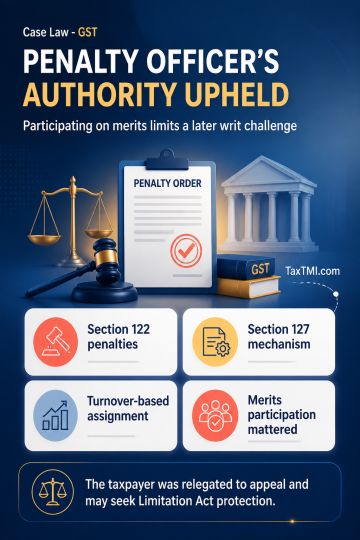
Proper-officer jurisdiction under UPGST penalty provisions upheld; participation on merits prevents bypassing the statutory appellate remedy through w...
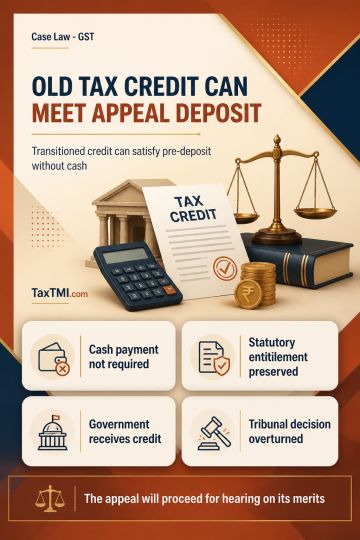
Transitioned CENVAT credit may validly satisfy mandatory pre-deposit requirements for legacy service tax appeals through Electronic Credit Ledger debi...
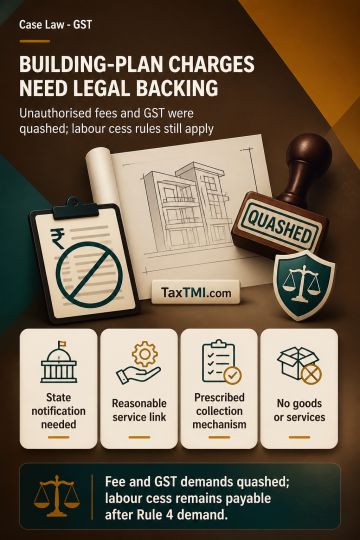
Building-plan sanction charges require statutory authority; unauthorised fees and GST were quashed, while labour cess must follow prescribed collectio...
Pure-agent exclusion fails where hotel booking facilitators receive third-party services themselves, making entire customer consideration taxable as r...
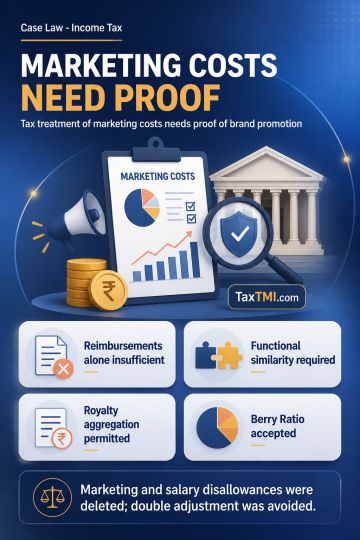
Transfer pricing requires evidence for AMP transactions, functionally reliable comparables, and appropriate aggregation or Berry Ratio benchmarking me...
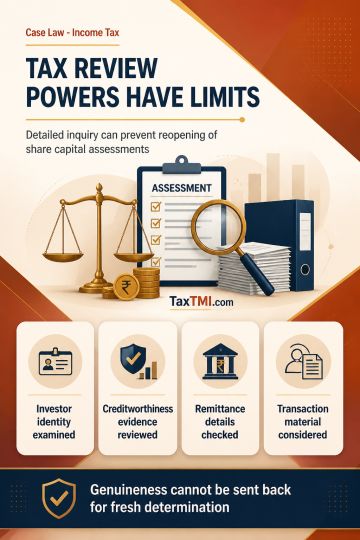
Revisionary jurisdiction cannot reopen share capital assessments where adequate inquiry supports a permissible view and no independent error is establ...
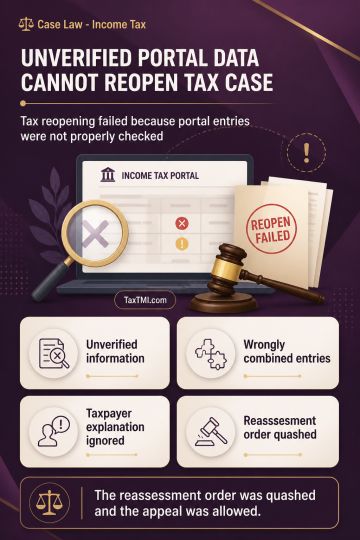
Reassessment jurisdiction fails where unverified portal information is aggregated without examining the taxpayer's explanation or relevance of entries...
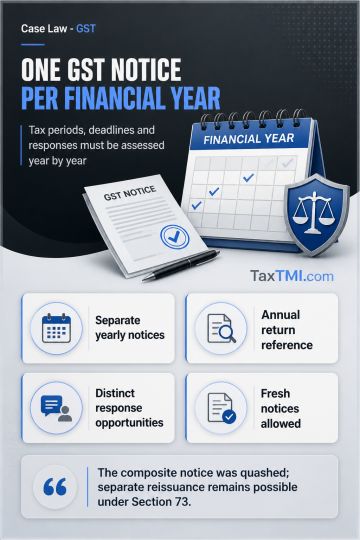
Section 73 of the CGST Act requires GST assessment and demand limitation to be determined separately for each financial year, with reference to the relevant annual return. A composite show cause notice covering multiple financial years improperly combines distinct tax periods, due dates, limitation periods, allegations and response opportunities. High Court precedent is binding within its territorial jurisdiction. The composite notice was quashed, while preserving the respondents' liberty to issue fresh notices separately in accordance with Section 73, subject to any other legal impediment.
Section 73 of the CGST Act requires GST assessment and demand limitation to be determined separately for each financial year, with reference to the relevant annual return. A composite show cause notice covering multiple financial years improperly combines distinct tax periods, due dates, limitation periods, allegations and response opportunities. High Court precedent is binding within its territorial jurisdiction. The composite notice was quashed, while preserving the respondents' liberty to issue fresh notices separately in accordance with Section 73, subject to any other legal impediment.
Note: It is a system-generated summary and is for quick reference only.
 TaxTMI
  TaxTMI
 of 4826









 Join Channel