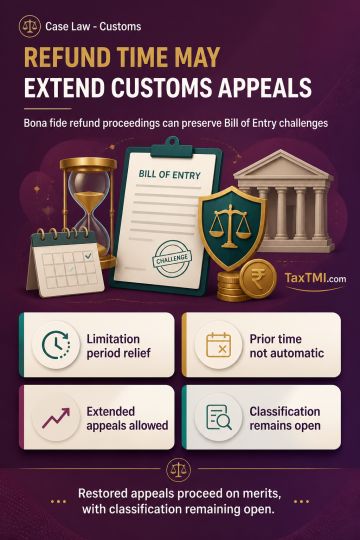
Limitation in customs appeals permits exclusion for bona fide refund proceedings, enabling restoration of Bill of Entry assessment challenges on merit...
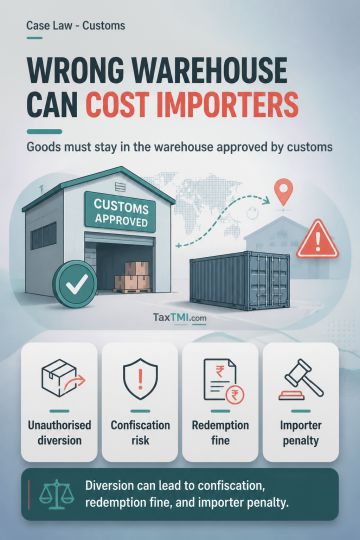
Warehousing permission requires deposit at the designated bonded warehouse; unauthorised diversion triggers confiscation, redemption fine and importer...
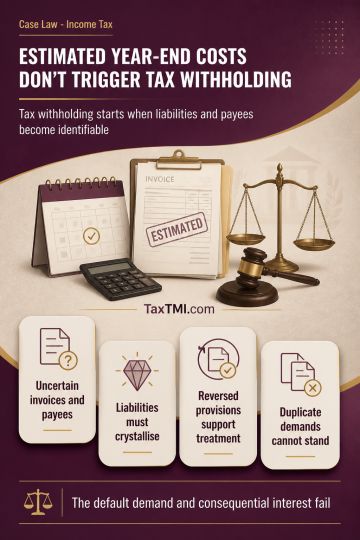
Year-end estimated expenditure provisions, where invoices, precise liabilities and payees remain unascertained, do not amount to credit of an ascertainable sum to an identified payee under the mercantile system. Tax-deduction obligations therefore arise only when liabilities crystallise, with tax deducted where applicable upon receipt of invoices; reversal of the provisions in the succeeding year supports that treatment. A demand for tax-deduction default cannot be sustained merely on creation of such provisions. Further, where the same non-deduction has already led to disallowance of expenditure, it cannot also support a tax-deduction default demand; consequential interest fails with the principal demand.
Year-end estimated expenditure provisions, where invoices, precise liabilities and payees remain unascertained, do not amount to credit of an ascertainable sum to an identified payee under the mercantile system. Tax-deduction obligations therefore arise only when liabilities crystallise, with tax deducted where applicable upon receipt of invoices; reversal of the provisions in the succeeding year supports that treatment. A demand for tax-deduction default cannot be sustained merely on creation of such provisions. Further, where the same non-deduction has already led to disallowance of expenditure, it cannot also support a tax-deduction default demand; consequential interest fails with the principal demand.
Note: It is a system-generated summary and is for quick reference only.
 TaxTMI
  TaxTMI
 of 4826










 Join Channel